










Breaking News
 #689: The Empire of Lies | Charles Goyette
 One Arizona storm; 15 rain totes
 Teach AI Good Morality
 Guilfoyle Resigns at Trump's Request Following Credit Card Scandal
Top Tech News
 I Built a Website to Expose Solar and Battery Scams
 Whistleblower Issues Dire Warning: Rogue AI, Hacking Nuclear Programs...
 Multi-material insulation delivers up to 10,000 x the stiffness
 Anduril's plan to save US sub edge from China's undersea surge
 Researchers Develop AI 'Mind-Reading' Tool That Reconstructs What Your Eyes See
 Video: Dexterous robot hand learns the delicate art of silk embroidery
 The computer that can read your mind:
 Seven apps. One craft
 SHOCK CASE REPORT: Advanced Alzheimer's Patient Regains Speech, Memory, Mobility...
 Most artificial limbs rely on silicone or plastic to mimic human hands.



QC Ware Quantum Loader Breakthrough for up 100X Faster Training of Quantum Machine Learning
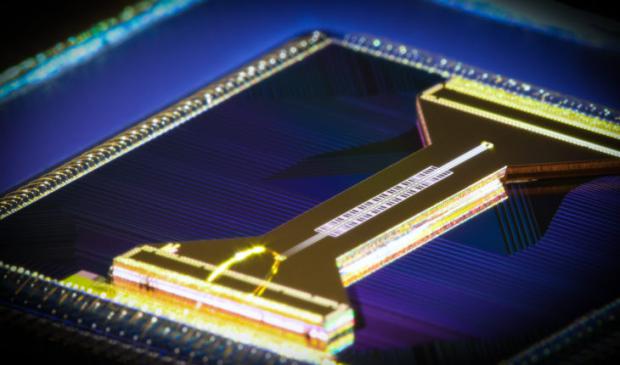
They have achieved a speedup of about 100 times.
Nextbigfuture interviewed Yianni Gamvros, Head of Product and Business Development at QC Ware. Quantum Computers are still much slower than classical computers. However, the new loading system, algorithm improvements and hardware improvements are rapidly enabling quantum systems to catch up to classical computers.
Classical AI systems have improved 44 times over the last eight years using algorithmic improvement. ImageNet classification has been decreasing by a factor of 2 every 16 months. Compared to 2012, it now takes 44 times less compute to train a neural network to the level of AlexNet. Moore's Law would yield an 11x cost improvement over this period with hardware speedup. there are custom AI chips that have about 100X speedup.
QC Ware's algorithms researchers can efficiently load classical data onto quantum hardware and how distance estimations can be performed quantumly. These new capabilities enabled by Data Loaders are now available in the latest release of QC Ware's Forge™ cloud services platform, an integrated environment to build, edit, and implement quantum algorithms on quantum hardware and simulators.