










Breaking News
 President Trump Finally Admits It
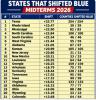 ALL 21 STATES. ALL 1,799 COUNTIES. EVERY SINGLE ONE SHIFTED BLUE.
 The Crisis in Poland
 Jefferson, Secession, and "All Men Are Created Equal"
Top Tech News
 Prism puts an eye-controlled Linux computer on your face
 Remember Yesterday: AI For Today and Tomorrow
 Robot Mowers Invade America's Golf Courses, Putting Groundskeepers On Notice
 Monstrous 13-foot mecha craves the dangerous jobs humans avoid
 Scentronic tech lets you smell the internet
 Virgin Galactic's new rocket plane revives its bid for a space airline
 The metal kept moving east while the sellers ran, and Ronnie called the flush a week early
 Chinese Company Develops $1,000 AI-Powered Laser System To Kill Mosquitoes
 PRP vs Exosomes vs Stem Cells: Which Fits Your Condition?
 SHOCKING: The Secret (Frantzve) Family Business



The Crisis in Poland
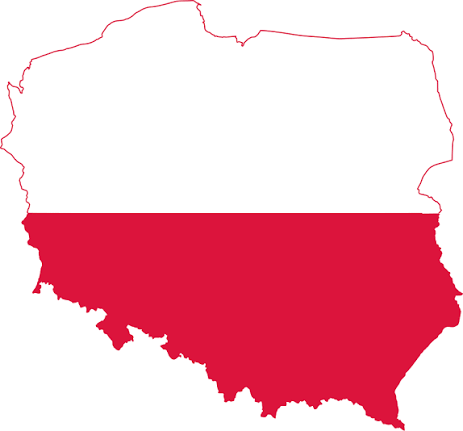
1) The first thing to say about Poland is that the current crisis is unlikely to turn violent, certainly not in a sustained way. There will be a lot of yelling and name-calling and a lot of references to obscure old feuds and scandals, but Poland is not Ukraine or even France, and will muddle through as usual with some kind of woolly compromise to see us through the next few years.
General Jaruzelski, the last major leader under Communism, used to be the neighbour who shared the boundary fence at the bottom of my garden. He oversaw martial law and a secret service which was pretty vicious – but looking back with the perspective of history, the remarkable thing is not how much, but how little, violent repression was used against Solidarno?? in 1980 to 1983. Some 120 people were killed and thousands imprisoned, but for a revolution that triggered world-shaking political change that is remarkably restrained.
Then with Wa??sa in power as President, Jaruzelski used to go about Warsaw quite openly, and I would say "Dzie? Dobry Panie Generale" to him in the mornings as he walked past my gate. Violence is not natural in Polish politics.
2) The second thing to understand is that Polish politics is split between the right and the nationalist right. The left is now almost insignificant – the mildly social-democratic Nowa Lewica is a small junior partner in Tusk's governing coalition and polls about 8%. That is pretty well the only "left". Elements of the governing Civic Coalition – such as Foreign Minister Radek Sikorski, are very right by British standards. Sikorski was in the Bullingdon Club with Osborne and Johnson and is a bit to the right of either on social or economic policy.
The opposition nationalist right are socially conservative and religious: abortion remains the touchstone defining issue, which directly relates to the current dispute about the Constitutional Tribunal. There is no significant economic division between the right and nationalist right, with the latter perhaps slightly more socially minded in matters like welfare spending.
It is a great mistake to try to shoehorn the divisions into a classic economic policy-related party alignment of left and right, or even into the liberal vs populist model. Poland is sui generis, a thing unto itself.
3) The crisis about the Constitutional Tribunal is Superficially Meta. It is about the composition of the Constitutional Tribunal rather than any case currently before the Court. But it has become the totem of the deep divisions in Polish society.
Poland has a hybrid system that is neither an executive presidency nor a parliamentary democracy. The power of legislative initiative lies with the Parliament (Sejm) and the Prime Minister appointed by the Sejm. But the President has an active power of veto and controls important appointments.