










Breaking News
 President Trump Finally Admits It
 ALL 21 STATES. ALL 1,799 COUNTIES. EVERY SINGLE ONE SHIFTED BLUE.
 The Crisis in Poland
 Jefferson, Secession, and "All Men Are Created Equal"
Top Tech News
 Prism puts an eye-controlled Linux computer on your face
 Remember Yesterday: AI For Today and Tomorrow
 Robot Mowers Invade America's Golf Courses, Putting Groundskeepers On Notice
 Monstrous 13-foot mecha craves the dangerous jobs humans avoid
 Scentronic tech lets you smell the internet
 Virgin Galactic's new rocket plane revives its bid for a space airline
 The metal kept moving east while the sellers ran, and Ronnie called the flush a week early
 Chinese Company Develops $1,000 AI-Powered Laser System To Kill Mosquitoes
 PRP vs Exosomes vs Stem Cells: Which Fits Your Condition?
 SHOCKING: The Secret (Frantzve) Family Business



Jefferson, Secession, and "All Men Are Created Equal"
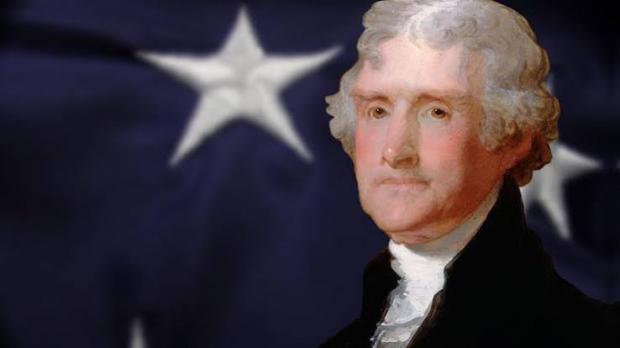
Since at least as early as the mid nineteenth century, the phrase has been used by many American politicians as justification for government intervention in the name of imposing whatever interpretation of "equality" happens to be popular at the time.
For example, the phrase is routinely used to justify federal intervention into democratically-elected state and local governments in places where federal employees have decided there is "too much" inequality. (We're told that democracy is sacrosanct, unless, of course, Washington politicians don't like the democratic outcomes.) When Washington does decide to impose its own vision on supposedly self-governing cities and states, the intervention is often justified on the grounds that some imagined benchmark of "equality" has not been met.
The same thing often happens internationally when the federal government wishes to invade some small and impoverished country. For example, when the United States government sought to justify its open-ended occupations of Iraq and Afghanistan, we were told—among other things—that women (or Kurds or democrats, etc.) must be made more equal, and thus, invasion was necessary.
This abuse of Jefferson's words in the Declaration of Independence has led some opponents of federal power to suggest that it might have been best if Jefferson had never said that men are, in some sense, equal. For example, Richard Weaver, a giant of the American conservative movement, enthusiastically opposed any notion of equality at all. He condemned the very concept—apparently including the Jeffersonian formulation—as a "chimerical notion."
Nonetheless, Jefferson meant something very specific when he used the term, and the fact that later politicians and activists assigned a completely different meaning to the word is hardly Jefferson's fault.
Jefferson did not mean equality in the sense that everyone is more or less equal in talents and abilities. And he certainly did not mean that equality (however defined) ought to imposed by a powerful state. To know what Jefferson meant, we need look no further than the milieu of American classical liberals of the late eighteenth century. On this, Murray Rothbard writes:
. . .the concept of equality achieved its widespread popularity during the classical-liberal movements of the eighteenth century, when it meant, not uniformity of status or income, but freedom for each and every man, without exception. In short, equality in those days meant the libertarian and individualist concept of full liberty for all persons.