










Breaking News
 Netanyahu Says Iran May Try To Disrupt Israeli Election With Attacks
 Trump Fires Another Salvo Into Israeli Politics As Netanyahu Neck-and-Neck With Gadi Eisenkot
 'Prison For Reich': Musk Slams Former Labor Secretary Over Commie Fever Dream To Nationalize
 Rubio Urges Cubans To Partner With CIA To Bring Change To Communist Country
Top Tech News
 Modular phone promises total privacy at the flick of a switch
 Genetically Engineered War Dogs for 134 Pound Cyborg Dire Wolves Now – Later 600 Pound Wolves
 They're Quietly REPLACING Our Food With THIS… And Nobody Is Talking About It!
 Chicago Opens First "Teacher-Free" AI School as Global Push Accelerates
 Solar Panels Are Doing Something Nobody Expected
 DeLorean climbs skyward to race electric flying cars
 Atari's 800XL returns with a keyboard, cartridges and BASIC
 Bioinspired robot airdrops into remote waters via morphing wing-sail
 Anduril interceptor adapts to emerging threats via swappable stages
 I Built a Website to Expose Solar and Battery Scams


Hybrid-electric STOL showcases flexibility in first public demo flights
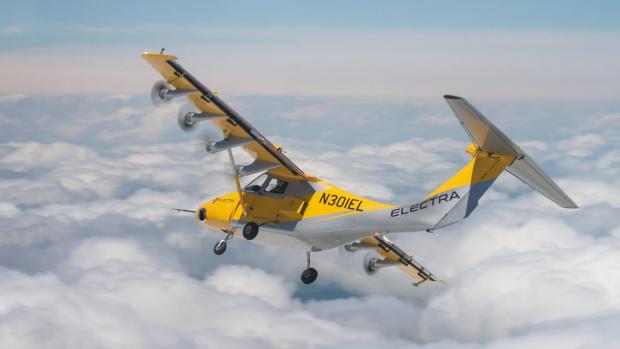
The Electra STOL (short take-off and landing) aircraft features eight electric props along the front edge of its wings. To help achieve the blown lift effect – which results in lift off at relatively low speeds of 35 mph (56 km/h) along a short runway – the aircraft sports large flaps at the rear edge of the wings.
Power for take-off is provided by onboard batteries, with the system switching to a small turbogenerator for cruising or topping up the batteries while in the air.
The company has been test flying the two-seat EL2 prototype since at least May 2024, but the recent flights at Virginia Tech – in partnership with Surf Air Mobility – represent the first series of public demonstrations.
Though the prototype did take-off and land utilizing a 300 x 75-ft (91 x 23-m) paved surface at the expansive Blacksburg campus, the EL2 showed off its flexibility by tackling other surfaces too. These included an access road in cooperation with Virginia's Department of Transportation, and a grass field at the university's Corporate Research Center.
"These demonstrations showcased breathtakingly short take-offs and landings and pinpoint landing capabilities with the power to transform aviation as we know it," said Marc Allen, CEO of Electra.
As Electra sees it, that transformation will bring air travel closer to where people live or work. The aim is to offer passengers brisk short hops with reduced waiting times and faster turnaround, compared to large out-of-town airports. The company highlights a recent Georgia Tech study that identified "significant demand for Direct Aviation and ideal routes for Ultra Short aviation services."
Electra also sees major savings for operators and passengers alike, noting that its aircraft could be run at a third of the cost of a helicopter while being significantly cleaner and quieter. "The aircraft will be faster to turn around, less expensive to operate, and easier to deploy," said Louis Saint-Cyr, COO and President of Hawai'i Operations at Surf Air Mobility.
The company has notched up more than 2,200 orders from over 60 operators around the globe, and is looking to start commercial flights of the EL9 Ultra Short nine-passenger aircraft by 2029. That's still a ways off, and still requires the many certification hurdles to be overcome. More use cases, sample routes and operator partnerships will be announced in the coming months.