










Breaking News
 This is unbelievable
  MASSIVE WIPEOUT IN KOREAN MARKETS
 EXCERPTS: Citigroup Inc. received approval to launch a wholly-owned securities business...
 At least 10 prominent athletes DIED UNEXPECTEDLY or were struck by anomalous medical...
Top Tech News
 Genetically Engineered War Dogs for 134 Pound Cyborg Dire Wolves Now – Later 600 Pound Wolves
 They're Quietly REPLACING Our Food With THIS… And Nobody Is Talking About It!
 Chicago Opens First "Teacher-Free" AI School as Global Push Accelerates
 Solar Panels Are Doing Something Nobody Expected
 DeLorean climbs skyward to race electric flying cars
 Atari's 800XL returns with a keyboard, cartridges and BASIC
 Bioinspired robot airdrops into remote waters via morphing wing-sail
 Anduril interceptor adapts to emerging threats via swappable stages
 I Built a Website to Expose Solar and Battery Scams
 Whistleblower Issues Dire Warning: Rogue AI, Hacking Nuclear Programs...



California Alternative Homes Made from Ferro-Cement Are Fire Resistant
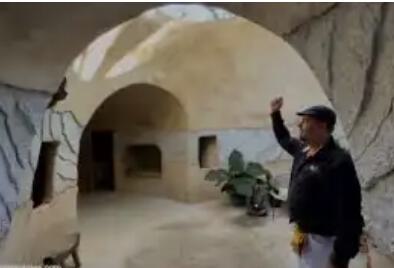
It was less expensive to build than a house using traditional building materials. Most of the home's structures have semi-outdoor spaces that are not taxed as living space.
Twenty years ago, Zach and Allison Anderson began digging into a hillside on their property in Grass Valley, California, to escape the heat, cold, and fire risk above ground. What started as a simple experiment has grown into a labyrinth of domed rooms, tunnels, and courtyards — a cluster of underground spaces that feels like the beginning of a small, earth-sheltered village.
Carved and sculpted largely by hand, their underground world bends to the shape of the hillside. Zach has developed an affordable way to build below the surface without the gloom of a bunker or the climate mismatch of an Earthship.
By keeping the insulated living core small and surrounding it with naturally tempered indoor-outdoor rooms, he's created spaces that stay comfortable year-round while keeping both construction costs and property taxes low.
From an underground fishpond to a grotto-turned-living room where parakeets fly freely under a skylit dome, every corner reflects Zach's inventiveness. Secret bookshelves reveal hidden pantries and stairways; a "living well" — his version of a living wall — channels cool, fragrant air from plants into the heart of the home.
Their most recent build, a compact underground guest house, may be the most accessible part of the project — a small prototype for anyone dreaming of a simple, affordable home built with the earth. With just enough space for a Murphy bed and kitchenette, it opens into shaded outdoor rooms that stay naturally temperate thanks to the surrounding soil.