










Breaking News
 20 Essential medicinal herbs every prepper should know
 The WINTER SUPERFOODS you should be eating instead of festive junk
 Terawatt Tantrums - How America is 15 Years Behind China's Power Infrastructure
 Trump ends Biden's fuel standards, slashes costs for American drivers
Top Tech News
 Build a Greenhouse HEATER that Lasts 10-15 DAYS!
 Look at the genius idea he came up with using this tank that nobody wanted
 Latest Comet 3I Atlas Anomolies Like the Impossible 600,000 Mile Long Sunward Tail
 Tesla Just Opened Its Biggest Supercharger Station Ever--And It's Powered By Solar And Batteries
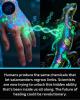 Your body already knows how to regrow limbs. We just haven't figured out how to turn it on yet.
 We've wiretapped the gut-brain hotline to decode signals driving disease
 3D-printable concrete alternative hardens in three days, not four weeks
 Could satellite-beaming planes and airships make SpaceX's Starlink obsolete?
 First totally synthetic human brain model has been realized
 Mach-23 potato gun to shoot satellites into space


Is AI a Catalyst for Growth–or For Collapse?
The current narrative holds that the big problem we need to solve is conjuring up cheap energy to power AI data centers. Fortunately for us, the solutions are at hand: building modular nuclear power plants at scale and tapping North America's vast reserves of cheap natural gas.
Problem solved! With cheap energy to power all the AI data centers, we're on a trajectory of fantastic growth of all the good things in life.
Let's consider the implicit assumptions buried in this narrative.
1. The unspoken assumption here is AI will solve all our problems because it's "smart." But this assumes the problems are intellectual puzzles rather than self-reinforcing, self-destructive structures fueled by corruption and perverse incentives embedded in the system itself.
2. The assumption is that if we replace human workers with apps and robots, that will automatically generate Utopia. But this is based on a series of baseless, pie-in-the-sky assumptions about human nature and the nature of social and economic structures.
3. The assumption is that being "entertained" by staring at screens all day is the foundation of human fulfillment and happiness, and so getting rid of human work will usher in Nirvana. The reality is humans are hard-wired to find fulfillment in purposeful, meaningful work that is valued by others. Staring at "entertainment" on screens all day isn't fulfillment, it's deranging and depressing.
This is human nature in a nutshell: Idle hands are the devil's workshop.
4. Another assumption is that every technological revolution generates more and better jobs by some causal mechanism. But there is no law of nature that technology inevitably creates more jobs than it destroys, or that the resulting jobs are more rewarding. That recent history supports this idea doesn't make it a causal law of nature. By its very nature, AI destroys jobs while generating few replacement jobs.
The handful of top AI programmers are paid (or promised) millions of dollars; the industry doesn't need more than a handful of top designers because AI can generate its own conventional coding.
5. This narrative assumes AI will be immensely profitable and the profit motive will push its limitless expansion. But once again, there are no laws of nature that every new technology is inevitably immensely profitable just because it's a new technology.
If the projected use-value doesn't materialize, the investment in the new tech is mal-invested–a stupendous waste of capital chasing a delusional pipe dream. Some percentage might generate some use-value, but this use-value may be obsoleted long before the massive initial investment pays off.