










Breaking News
 America Got Rich on Competition, Then Legislated It Away
 Throttling Ukraine's Starlink access heightens concerns over Musk
 Social Security shock as millions of Americans learn their monthly checks will only be $75 higher...
 How the Equibit Lawsuit Shook the Cryptocurrency World
Top Tech News
 I Built a Website to Expose Solar and Battery Scams
 Whistleblower Issues Dire Warning: Rogue AI, Hacking Nuclear Programs...
 Multi-material insulation delivers up to 10,000 x the stiffness
 Anduril's plan to save US sub edge from China's undersea surge
 Researchers Develop AI 'Mind-Reading' Tool That Reconstructs What Your Eyes See
 Video: Dexterous robot hand learns the delicate art of silk embroidery
 The computer that can read your mind:
 Seven apps. One craft
 SHOCK CASE REPORT: Advanced Alzheimer's Patient Regains Speech, Memory, Mobility...
 Most artificial limbs rely on silicone or plastic to mimic human hands.



20 Essential medicinal herbs every prepper should know
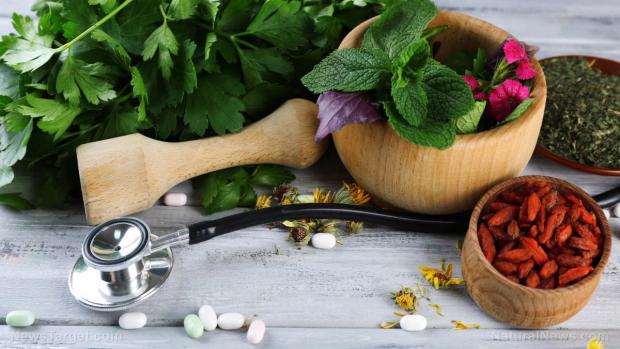
Many modern pharmaceuticals trace their origins to botanical sources, yet few people today recognize the lifesaving potential of common herbs. For preppers, homesteaders and self-reliant individuals, cultivating medicinal plants can mean the difference between thriving and merely surviving when conventional medicine is unavailable.
From ancient Native American remedies to European folk medicine, these 20 essential herbs offer natural solutions for pain relief, wound care, immune support and more. Understanding their uses—and potential risks—could prove indispensable in times of emergencies.
Top medicinal herbs for survival
1. Evening primrose
Known for its vibrant yellow or pink flowers, evening primrose has been used for centuries to treat coughs, sore throats and digestive issues. The roots, flowers and leaves of evening primrose are edible and rich in vitamin C. Poultices made from the plant promote wound healing.
2. California poppy
Unlike its opium-producing cousin, the California poppy offers mild pain relief without addiction risks. Native Americans brewed it into teas for anxiety and insomnia. The golden flowers and seeds are also edible.
3. Calendula
This bright-flowered herb, originally from Southern Europe, boasts powerful antiseptic properties. Infusions and salves made from calendula petals prevent infections and soothe radiation burns.
4. Lavender
With over 40 species, lavender is prized for its antimicrobial and anti-inflammatory effects. Lavender essential oil accelerates wound healing, while teas and baths ease muscle pain and stress.
5. Yarrow
Navajo tribes revered yarrow as a "life medicine" for its antiseptic and anti-inflammatory properties. Chewing the leaves relieves toothaches, while infusions treat ear infections and improve blood circulation.
6. Feverfew
Traditionally used for migraines and stomach ailments, feverfew reduces headache frequency. However, improper use can cause side effects, so caution is advised.
7. Chamomile
Best known for its calming effects, chamomile also aids digestion and speeds wound healing. It can be consumed as tea or applied topically in salves.