










Breaking News
 Why Are You Gay? Milo Yiannopoulos Explains.
 Futuristic dome grows food by itself – with help from some fish
 Why Families are Leaving Government Schools: Cultural Shifts and Civic Solutions
 Trump DOJ Sides With Roundup Manufacturer Over Cancer Victims in Supreme Court Case
Top Tech News
 Build a Greenhouse HEATER that Lasts 10-15 DAYS!
 Look at the genius idea he came up with using this tank that nobody wanted
 Latest Comet 3I Atlas Anomolies Like the Impossible 600,000 Mile Long Sunward Tail
 Tesla Just Opened Its Biggest Supercharger Station Ever--And It's Powered By Solar And Batteries
 Your body already knows how to regrow limbs. We just haven't figured out how to turn it on yet.
 We've wiretapped the gut-brain hotline to decode signals driving disease
 3D-printable concrete alternative hardens in three days, not four weeks
 Could satellite-beaming planes and airships make SpaceX's Starlink obsolete?
 First totally synthetic human brain model has been realized
 Mach-23 potato gun to shoot satellites into space


Trump DOJ Sides With Roundup Manufacturer Over Cancer Victims in Supreme Court Case
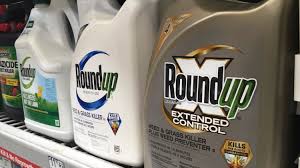
The Trump administration is pushing for the US Supreme Court to shield the manufacturer of Roundup from thousands of state lawsuits alleging that its widely used herbicide product causes cancer.
On Monday, US Solicitor General D. John Sauer recommended that the high court agree to hear a challenge to a Missouri jury's verdict in 2023 that awarded $1.25 million to a man named John Durnell, who claimed that the product caused him to develop non-Hodgkin lymphoma.
Bayer, the agribusiness giant that purchased the manufacturer of Roundup, the agribusiness giant Monsanto, in 2018, immediately challenged the verdict.
In 2015, the World Health Organization's International Agency for Research on Cancer (IARC) classified glyphosate, the active ingredient in Roundup, as "probably carcinogenic to humans" based on "limited evidence."
That evidence became less limited in 2019, when a prominent meta-analysis by a team of environmental health researchers found that people exposed to glyphosate at the highest levels had a 41% higher risk of developing non-Hodgkin lymphoma than those who weren't.
There are nearly 4,500 Roundup claims currently pending in federal court, and at least 24 cases have gone to trial since October 2023. They make up just a fraction of the more than 170,000 claims filed.
According to Bloomberg, Bayer has already been forced to pay out more than $10 billion in verdicts and settlements over the product, which has caused a massive drain on the company's stock price.
In what it said was an effort to "manage litigation risk and not because of any safety concerns," Bayer removed glyphosate-based herbicides from the residential market in 2023, switching to formulas that "rely on alternative active ingredients."
That didn't stop the lawsuits from coming. Durnell's victory was the first successful case brought against Bayer outside California, the only state that labels the product as carcinogenic. That in Missouri opened the floodgates in other states, and plaintiffs subsequently won sizable payouts in Georgia and Pennsylvania.
But now the Trump administration is trying to help the company skirt further accountability. Sauer, who is tasked with arguing for the government in nearly every Supreme Court case, filed a 24-page brief stating that there is a lack of clarity on whether states have the authority to determine whether Bayer and Monsanto violated the law by failing to warn customers about potential cancer risks from Roundup.
Bayer argues that these cases are preempted by the Federal Insecticide, Fungicide, and Rodenticide Act (FIFRA), which forbids states from enacting labeling requirements more stringent than those recommended by the federal government.
Sauer agreed with Bayer, stating in the brief that the US Environmental Protection Agency "has repeatedly determined that glyphosate is not likely to be carcinogenic in humans, and the agency has repeatedly approved Roundup labels that did not contain cancer warnings."