










Breaking News
 The #1 Most Dangerous Fat in the World!
 Is $140K the New Poverty Line? Is This the End of America's Middle Class?
 Here Are the NEWLY RELEASED Epstein Images Tied to Powerful Democrats
 Joe Biden Still Struggling to Raise Money for Presidential Library – No New Donations...
Top Tech News
 This tiny dev board is packed with features for ambitious makers
 Scientists Discover Gel to Regrow Tooth Enamel
 Vitamin C and Dandelion Root Killing Cancer Cells -- as Former CDC Director Calls for COVID-19...
 Galactic Brain: US firm plans space-based data centers, power grid to challenge China
 A microbial cleanup for glyphosate just earned a patent. Here's why that matters
 Japan Breaks Internet Speed Record with 5 Million Times Faster Data Transfer
 Advanced Propulsion Resources Part 1 of 2
 PulsarFusion a forward-thinking UK aerospace company, is pushing the boundaries of space travel...
 Dinky little laser box throws big-screen entertainment from inches away
 'World's first' sodium-ion flashlight shines bright even at -40 ºF



Jesse Kelly and Joe Allen on AI and Its Impact – "I Do Consider This to Be an Active War Agains
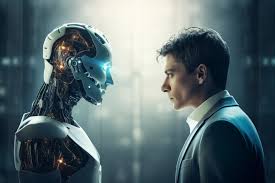
Jesse Kelly and tech expert and author of Dark Aeon, Joe Allen, talked about AI and its impact on humanity. Allen explained to Kelly the history of AI and how it has greatly advanced since it started out as a theory.
"Joining me now, Joe Allen, author of the wonderful book Dark Aeon," Kelly said.
"I need you to take me as basic as you can and then we will build up to where we are at and where we are going," Kelly said.
"In short, artificial intelligence is software that thinks in scare quotes, thinks sort of like a human," Allen said.
"The reality is that systems like Chat GPT. In the beginning it was, you could say, barely intelligent," Allen said.
"By the time we get to 2020, and the company Open AI had improved both the system itself, the software and expanded the amount of data and the amount of computation to be thrown at it, it started doing really weird things," Allen explained.
"The weirdest thing that it did was take all of that data and began to produce something like a human response," Allen continued.
Allen explained that early AI was very limited in its responses. The technology behind the newer and more advanced AI is much more intricate. It gathers information from numerous sources and even uses previous conversations with AI to build on itself.
"The previous chatbots by and large had these canned responses," Allen said.
"The newer systems have trained on basically all available human text on the internet, in books, and now more and more they are being trained on conversations people will have had with AI. Hundreds of millions of conversations," Allen explained.
"In essence, if you could imagine a massive computer system with a virtual brain inside of it, chewing on all this data," Allen said.
"In the new systems, it not only produces a coherent response, it can solve math problems at a PhD level. It can formulate actionable scientific experiments," Allen said.
"It can give you responses on any high-level academic question that you have at a PhD level," Allen continued.