










Breaking News
 The #1 Most Dangerous Fat in the World!
 Is $140K the New Poverty Line? Is This the End of America's Middle Class?
 Here Are the NEWLY RELEASED Epstein Images Tied to Powerful Democrats
 Joe Biden Still Struggling to Raise Money for Presidential Library – No New Donations...
Top Tech News
 This tiny dev board is packed with features for ambitious makers
 Scientists Discover Gel to Regrow Tooth Enamel
 Vitamin C and Dandelion Root Killing Cancer Cells -- as Former CDC Director Calls for COVID-19...
 Galactic Brain: US firm plans space-based data centers, power grid to challenge China
 A microbial cleanup for glyphosate just earned a patent. Here's why that matters
 Japan Breaks Internet Speed Record with 5 Million Times Faster Data Transfer
 Advanced Propulsion Resources Part 1 of 2
 PulsarFusion a forward-thinking UK aerospace company, is pushing the boundaries of space travel...
 Dinky little laser box throws big-screen entertainment from inches away
 'World's first' sodium-ion flashlight shines bright even at -40 ºF



Can My iPhone 17 Pro Match a 6K Cinema Camera? I Teamed Up With a Pro to Find Out
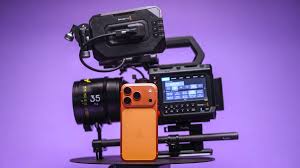
The iPhone 17 Pro packs a powerful video setup with a trio of cameras, large image sensors (for a phone), ProRes raw codecs and Log color profiles for advanced editing. It makes the phone one of the most powerful and dependable video shooters among today's smartphones.
Apple often boasts about famous directors using the iPhone to shoot films and music videos. The company even records its event videos for new products with the iPhone.
But is the iPhone really good enough at shooting video to replace a traditional cinema camera? To see how good the iPhone 17 Pro is for professional use, I gave it a proper test.
I put together a video shoot where I pitted the $1,000 iPhone against a full professional cinema camera rig, worth thousands of dollars, to see just how well Apple's phone can hold its own. I planned a video production at my favorite coffee roaster in Edinburgh, called Santu, which is based in a stunning building that I knew would look amazing on camera.
To give both cameras the best chance, I worked with Director of Photography Cal Hallows, who has been responsible for production on major shoots around the world, working with brands including Aston Martin, the BBC, IBM and Hilton Hotels.
Here's what happened.
Our filming equipment
We didn't use any external lenses with the iPhone; instead, we relied on either the built-in main, ultrawide or telephoto options. I shot my footage using the BlackMagic Camera app. I had a Crucial X10 external SSD since I was recording in Apple's ProRes raw codec, which creates large files.
I also had a variable neutral density filter to achieve a consistent shutter speed. For some shots, I used Moment's SuperCage to help give me a better grip -- and therefore smoother footage. But for other shots, I just used the phone by itself to make it easier to get into tight spaces. More on that later.
The iPhone's competition was the $3,300 BlackMagic Pyxis 6K. It's a professional cinema camera with a full-frame 6K resolution image sensor and raw video capabilities. I paired that with some stunning pro cine lenses, including a set of Arles Primes, the XTract Probe lens from DZO Film and a couple of choice cine primes from Sigma. It's a formidable and pricey setup for any cinematographer.