










Breaking News
 The #1 Most Dangerous Fat in the World!
 Is $140K the New Poverty Line? Is This the End of America's Middle Class?
 Here Are the NEWLY RELEASED Epstein Images Tied to Powerful Democrats
 Joe Biden Still Struggling to Raise Money for Presidential Library – No New Donations...
Top Tech News
 This tiny dev board is packed with features for ambitious makers
 Scientists Discover Gel to Regrow Tooth Enamel
 Vitamin C and Dandelion Root Killing Cancer Cells -- as Former CDC Director Calls for COVID-19...
 Galactic Brain: US firm plans space-based data centers, power grid to challenge China
 A microbial cleanup for glyphosate just earned a patent. Here's why that matters
 Japan Breaks Internet Speed Record with 5 Million Times Faster Data Transfer
 Advanced Propulsion Resources Part 1 of 2
 PulsarFusion a forward-thinking UK aerospace company, is pushing the boundaries of space travel...
 Dinky little laser box throws big-screen entertainment from inches away
 'World's first' sodium-ion flashlight shines bright even at -40 ºF



Smart Glasses Are Coming for Your Face, With Wild Options for 2026
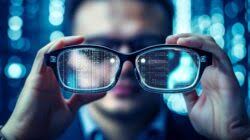
At Google's Pier 57 offices in New York overlooking the Hudson River earlier this month, I had the future in my hands — and on my face. I wore wireless glasses with a display in one eye that could project Google Maps onto the floor in front of me, show me Uber updates, and automatically recognize and translate languages spoken aloud. I could understand a conversation in Chinese.
I tried another pair of glasses, connected by cable to a phone-like puck. This pair could run apps in front of me, just like a mixed-reality VR headset. I could connect with a PC, click on floating cubes with my hands and play 3D games. It was like a Vision Pro I could carry in my jacket pocket.
That future is upon us. You'll be able to try out those glasses for yourself in 2026.
But those two very different stylings — one everyday and subtle, one more like a tiny AR headset — are just a glimmer of what's coming.
My desk is covered with smart glasses. A pair of large black frames that show me a color display in one eye and that have a neural wristband I can use to relay commands. A regular-looking set of Ray-Bans that play music and take photos.
Then there's the pair of black glasses that have lenses I can snap in, with green monochrome displays and ChatGPT integrated. And the thin glasses that have displays and a companion ring, but no speakers. And the glasses built to assist my hearing.
To watch movies or do work, sometimes I plug a completely different set of glasses that can't work wirelessly at all into my phone or laptop with a USB cable.
Smart glasses are the biggest new product trend as we cross the halfway mark of the 2020s. Glasses with smart features may conjure up visions of Tony Stark's eyewear, or those world-scanning glasses in the Marksman movies, and that's exactly what most big tech companies are aiming for.
"What we talked about originally, when we brought up the vision of this platform, was the old Iron Man movies where Tony Stark has a Jarvis that's helping him," Google's Android Head, Sameer Samat, tells me. "That's not a chatbot interface — that's an agent that can work with you and solve a task in the space that you're in. And I think that's a super exciting vision."