










Breaking News
 The #1 Most Dangerous Fat in the World!
 Is $140K the New Poverty Line? Is This the End of America's Middle Class?
 Here Are the NEWLY RELEASED Epstein Images Tied to Powerful Democrats
 Joe Biden Still Struggling to Raise Money for Presidential Library – No New Donations...
Top Tech News
 This tiny dev board is packed with features for ambitious makers
 Scientists Discover Gel to Regrow Tooth Enamel
 Vitamin C and Dandelion Root Killing Cancer Cells -- as Former CDC Director Calls for COVID-19...
 Galactic Brain: US firm plans space-based data centers, power grid to challenge China
 A microbial cleanup for glyphosate just earned a patent. Here's why that matters
 Japan Breaks Internet Speed Record with 5 Million Times Faster Data Transfer
 Advanced Propulsion Resources Part 1 of 2
 PulsarFusion a forward-thinking UK aerospace company, is pushing the boundaries of space travel...
 Dinky little laser box throws big-screen entertainment from inches away
 'World's first' sodium-ion flashlight shines bright even at -40 ºF



It's Official: Ditching The SATs Was A Big Mistake
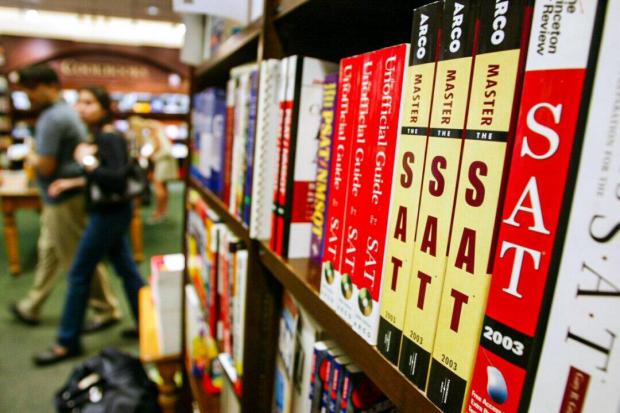
That decision, initially framed as a pandemic necessity, quickly reshaped admissions nationwide. By late 2022, roughly 1,750 schools, or about 80 percent of U.S. universities, had adopted test-optional policies, according to Forbes.
"It's a sea change in terms of how admissions decisions are being made," Robert Schaeffer, of the National Center for Fair and Open Testing, told NBC News.
"The pandemic created a natural experiment."
Five years later, the results of this "natural experiment" are in. A report released by UC San Diego in November tells the story.
"Over the past five years, UC San Diego has experienced a steep decline in the academic preparation of its entering first-year students—particularly in mathematics, but also in writing and language skills," a new university report reads.
"This trend poses serious challenges both to student success and to the university's instructional mission."
Those words might sound ominous, but they don't do justice to just how bad the slide has been.
Roughly 1 in 8 UCSD freshmen are working with math skills that don't clear the high school bar - a 30-fold jump since 2020.
It gets worse, however.
The report concluded that 70 percent of those students fall below middle school levels.
To give you an idea of what we're talking about, a full quarter of students failed to solve the following equation: 7 + 2 = [ ] + 6.
This means that my 9-year-old son, who tests high in math, is likely more equipped mathematically than many of these college students. I say this not as a point of pride, but to emphasize the disservice done to students thrust into (very pricey) college courses.
It's not just math, however.
The report found that 40 percent of students deficient in arithmetic also couldn't write (or, in the euphemistic language of the report, "required remedial writing instruction").