










Breaking News
 Erika Kirk shares update after private in-person meeting with Candace Owens
 Candace Owens Reacts to Erika Kirk's Interviews and Comments about Questioning TPUSA
 Bank of America just leaked their report to institutional clients.
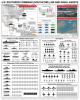 IDEAL HUB TO KICK OFF THE GRAND PLAN: BIRTH OF "USAMERICAS"
Top Tech News
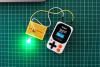 This tiny dev board is packed with features for ambitious makers
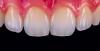 Scientists Discover Gel to Regrow Tooth Enamel
 Vitamin C and Dandelion Root Killing Cancer Cells -- as Former CDC Director Calls for COVID-19...
 Galactic Brain: US firm plans space-based data centers, power grid to challenge China
 A microbial cleanup for glyphosate just earned a patent. Here's why that matters
 Japan Breaks Internet Speed Record with 5 Million Times Faster Data Transfer
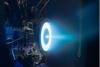 Advanced Propulsion Resources Part 1 of 2
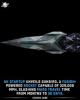 PulsarFusion a forward-thinking UK aerospace company, is pushing the boundaries of space travel...
 Dinky little laser box throws big-screen entertainment from inches away
 'World's first' sodium-ion flashlight shines bright even at -40 ºF



First Human Cornea Transplant Using 3D Printed, Lab-Grown Tissue Restores Sight...
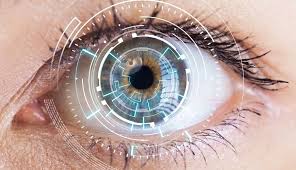
The first successful human implant of a 3D-printed cornea made from human eye cells cultured in a laboratory has restored a patient's sight.
The North Carolina-based company that developed the cornea described the procedure as a 'world first'—and a major milestone toward its goal of alleviating the lack of available donor tissue and long wait-times for people seeking transplants.
According to Precise Bio, its robotic bio-fabrication approach could potentially turn a single donated cornea into hundreds of lab-grown grafts, at a time when there's currently only one available for an estimated 70 patients who need one to see.
"This achievement marks a turning point for regenerative ophthalmology—a moment of real hope for millions living with corneal blindness," Aryeh Batt, Precise Bio's co-founder and CEO, said in a statement.
"For the first time, a corneal implant manufactured entirely in the lab from cultured human corneal cells, rather than direct donor tissue, has been successfully implanted in a patient."
The company said the transplant was performed Oct. 29 in one eye of a patient who was considered legally blind.
"This is a game changer. We've witnessed a cornea created in the lab, from living human cells, bring sight back to a human being," said Dr. Michael Mimouni, director of the cornea unit at Rambam Medical Center in Israel, who performed the procedure.
"It was an unforgettable moment—a glimpse into a future where no one will have to live in darkness because of a shortage of donor tissue."
Dubbed PB-001, the implant is designed to match the optical clarity, transparency and bio-mechanical properties of a native cornea. Previously tested in animal models, the company said its graft is capable of integrating with a patient's own tissue.
The outer layer of the eye—covering the iris and pupil—can end up clouding a person's vision following injuries, infections, scarring and other conditions. PB-001 is currently being tested in a single-arm phase 1 trial in Israel, which aims to enroll between 10 and 15 participants with excess fluid buildups in the cornea due to dysfunction within its inner cell layers.
Precise Bio said it plans to announce top-line results from the study in the second half of 2026, tracking six-month efficacy outcomes.