










Breaking News
 Canada's MAID CULTURE OF DEATH Just Hit Rock Bottom: KILLING PRISONERS NOW!!!
 Weight gain single-handedly prevented by a gut microbe
 Doug Casey on 2025's Defining Events and What Comes Next
 BREAKING: Officer Tatum & Other Investigators Believe A Potential Suspect In The Brown...
Top Tech News
 This tiny dev board is packed with features for ambitious makers
 Scientists Discover Gel to Regrow Tooth Enamel
 Vitamin C and Dandelion Root Killing Cancer Cells -- as Former CDC Director Calls for COVID-19...
 Galactic Brain: US firm plans space-based data centers, power grid to challenge China
 A microbial cleanup for glyphosate just earned a patent. Here's why that matters
 Japan Breaks Internet Speed Record with 5 Million Times Faster Data Transfer
 Advanced Propulsion Resources Part 1 of 2
 PulsarFusion a forward-thinking UK aerospace company, is pushing the boundaries of space travel...
 Dinky little laser box throws big-screen entertainment from inches away
 'World's first' sodium-ion flashlight shines bright even at -40 ºF



'Gaslighting of Lyme patients is over': RFK Jr. promises renewed focus
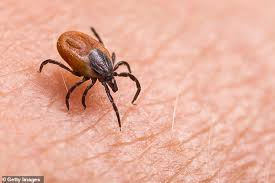
Kennedy made the comments as he convened a roundtable of patients and medical providers.
Just one year ago before he was confirmed as the health secretary in February, Kennedy promoted a conspiracy theory that Lyme disease is a militarily engineered bioweapon. In 2024, Kennedy said on his podcast that it was "highly likely" that Lyme disease was developed in a military lab on Long Island, New York.
"And we cannot say 100% for sure, but we do know that they were experimenting with ticks there," he said.
He was asked about his comment about it being a "bioweapon" by Democratic Senator Michael Bennet of Colorado during his confirmation hearing in January.
"I probably did say that," Kennedy responded.
His conspiracy theories claiming vaccines cause autism, linking antidepressants to school shootings and even suggesting WiFi causes cancer have alarmed healthcare professionals and Democratic lawmakers.
On Monday during the roundtable, Kennedy asserted - without proof - that officials at the U.S. Department of Health and Human Services had claimed Lyme disease "did not exist."
The Center for Diseases Control and Prevention for years has published a web page devoted to Lyme disease, detailing symptoms and treatment. The National Institute of Allergy and Infectious Diseases (NIAID), part of the National Institutes of Health, has awarded numerous projects for research into the disease, including five in 2023. The research is geared toward better understanding post-treatment Lyme Disease Syndrome.
While the CDC doesn't say that Lyme disease doesn't exist, it "discourages the use of the term 'Chronic Lyme disease' because it implies that prolonged symptoms are caused by an ongoing bacterial infection." which is not the case.
Instead, the CDC uses the term "post-treatment Lyme disease syndrome" in patients who experience "lingering symptoms," a practice which has been controversial.