










Breaking News
 Canada's MAID CULTURE OF DEATH Just Hit Rock Bottom: KILLING PRISONERS NOW!!!
 Weight gain single-handedly prevented by a gut microbe
 Doug Casey on 2025's Defining Events and What Comes Next
 BREAKING: Officer Tatum & Other Investigators Believe A Potential Suspect In The Brown...
Top Tech News
 This tiny dev board is packed with features for ambitious makers
 Scientists Discover Gel to Regrow Tooth Enamel
 Vitamin C and Dandelion Root Killing Cancer Cells -- as Former CDC Director Calls for COVID-19...
 Galactic Brain: US firm plans space-based data centers, power grid to challenge China
 A microbial cleanup for glyphosate just earned a patent. Here's why that matters
 Japan Breaks Internet Speed Record with 5 Million Times Faster Data Transfer
 Advanced Propulsion Resources Part 1 of 2
 PulsarFusion a forward-thinking UK aerospace company, is pushing the boundaries of space travel...
 Dinky little laser box throws big-screen entertainment from inches away
 'World's first' sodium-ion flashlight shines bright even at -40 ºF



Tucker Carlson and the Freedom of Speech
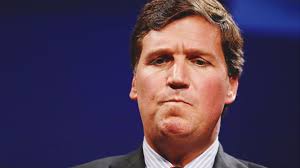
Last week, Sen. Charles Schumer, the leader of the Democrats in the United States Senate, introduced a resolution on behalf of himself and 40 other Senate Democrats that, if passed, would record the sense of the Senate as condemning the media superstar Tucker Carlson because of the political, historical and cultural opinions of a guest on Carlson's podcast. You read that correctly: The US Senate is being asked to condemn Carlson because of what someone else said.
Here is the back story.
When James Madison was crafting the iconic language of the First Amendment — "Congress shall make no law … abridging the freedom of speech or of the press" — he insisted that the word "the" precede the word "freedom" in the text of the amendment so as to emphasize the understanding of the drafters and ratifiers that expressive freedoms preexisted the drafting of the amendment. The theory of law offering that the freedom of speech is prepolitical offers as well that it is natural. It comes from our humanity.
The theory of the personal origin of human freedom was crafted by Aristotle, refined by St. Augustine, codified by St. Thomas Aquinas, articulated in treatise form by John Locke and woven into the Declaration of Independence by Thomas Jefferson, who wrote that pursuant to "the Laws of Nature and of Nature's God" we are all endowed by our "Creator with certain unalienable Rights, that among these are Life, Liberty, and the Pursuit of Happiness."
Some scholars contend that freedom comes from a collective community consensus, but most accept the Madison/Jefferson view that freedom is either a gift from God who gave us perfect free will or, because our human nature has developed over thousands of years to seek the truth and avoid pain, our nature has become imbued with the exercise of basic freedoms; chief among which — after life itself — is speech. Of course, if freedom depends on community consensus, it is hardly inalienable.
Madison's task as the drafter of the Bill of Rights was to codify Jefferson's lofty language and the values articulated by it into the positive law of the land; in this case, the supreme law of the land.
Some scholars have argued that the speech and press clauses of the First Amendment were intended only to prohibit congressionally enacted prior restraint on speech and publications. And some have argued that the clauses only restrain Congress, not the states nor the president. Yet, after a judicial revolution on expressive rights in the federal courts in the 1960s, it is clear that today no government and no person using government assets may abridge the freedom of speech or of the press.
Whatever one's understanding of the origins of the human freedoms, it is also clear beyond serious dispute that the currently prevailing and nearly universally accepted judicial understanding of the freedom of speech and of the press in the United States reinforces that political speech can be unbridled. The whole purpose of the First Amendment speech and press clauses is to encourage — and to require the government to protect — open, wide, robust, even incendiary, caustic and hateful expressions about the policies and the personnel of the government.