










Breaking News
 Chairman Rand Paul Releases New Report Revealing Hundreds of Billions...
 Get Schiffty Music Video | Rick and Morty | Adult Swim
 Astrophysicist Dr. Willie Soon reminds us that "CO2 is the gas of life"...
 Fireballs are coming
Top Tech News
 This tiny dev board is packed with features for ambitious makers
 Scientists Discover Gel to Regrow Tooth Enamel
 Vitamin C and Dandelion Root Killing Cancer Cells -- as Former CDC Director Calls for COVID-19...
 Galactic Brain: US firm plans space-based data centers, power grid to challenge China
 A microbial cleanup for glyphosate just earned a patent. Here's why that matters
 Japan Breaks Internet Speed Record with 5 Million Times Faster Data Transfer
 Advanced Propulsion Resources Part 1 of 2
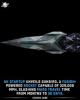 PulsarFusion a forward-thinking UK aerospace company, is pushing the boundaries of space travel...
 Dinky little laser box throws big-screen entertainment from inches away
 'World's first' sodium-ion flashlight shines bright even at -40 ºF



22-Year-Old Pleads Guilty in $263 Million Bitcoin and Crypto Theft

A 22-year-old California resident has pleaded guilty to his role in a multi-state social engineering scheme that stole roughly $263 million in crypto.
Evan Tangeman of Newport Beach, California, admitted laundering $3.5 million in crypto for the criminal enterprise, the U.S. Attorney's Office announced Monday.
Tangeman pleaded guilty to participating in a Racketeer Influenced and Corrupt Organizations (RICO) conspiracy before U.S. District Court Judge Colleen Kollar-Kotelly.
Sentencing is scheduled for April 24, 2026. He is the ninth defendant to enter a guilty plea in this specific investigation.
The court also unsealed the Second Superseding Indictment, adding three more defendants. Nicholas Dellecave, also known as "Nic" or "Souja," Mustafa Ibrahim, also known as "Krust," and Danish Zulfiqar, also known as "Danny" or "Meech," face charges of RICO conspiracy along with the other members of the Social Engineering Enterprise (SE Enterprise).
Dellecave was arrested in Miami on Dec. 3, 2025. Ibrahim and Zulfiqar were recently arrested in Dubai.
According to prosecutors, the enterprise began in October 2023 and continued through at least May 2025. It originated from friendships formed on online gaming platforms. The group included individuals in California, Connecticut, New York, Florida, and abroad.
Details of the rampant crypto crime
The scheme involved database hackers, organizers, target identifiers, callers, and residential burglars who targeted hardware wallets containing cryptocurrency. Hackers used stolen databases to identify high-value targets.
Callers impersonated crypto exchange staff or email providers to trick victims into revealing account credentials.
Burglars physically broke into homes to steal hardware wallets.