










Breaking News
 James O'Keefe: My entire speech at AmericaFest 2025. We're not stopping. Join us to expose..
 U.S. vs. Chinese Military Comparison – Focus on Asia-Taiwan Scenario
 DoJ Sues Four More States for Failing To Produce Voter-roll Data
 World's Largest Aviation Giant Abandons Google Over Security Concerns
Top Tech News
 Perfect Aircrete, Kitchen Ingredients.
 Futuristic pixel-raising display lets you feel what's onscreen
 Cutting-Edge Facility Generates Pure Water and Hydrogen Fuel from Seawater for Mere Pennies
 This tiny dev board is packed with features for ambitious makers
 Scientists Discover Gel to Regrow Tooth Enamel
 Vitamin C and Dandelion Root Killing Cancer Cells -- as Former CDC Director Calls for COVID-19...
 Galactic Brain: US firm plans space-based data centers, power grid to challenge China
 A microbial cleanup for glyphosate just earned a patent. Here's why that matters
 Japan Breaks Internet Speed Record with 5 Million Times Faster Data Transfer
 Advanced Propulsion Resources Part 1 of 2


DoJ Sues Four More States for Failing To Produce Voter-roll Data
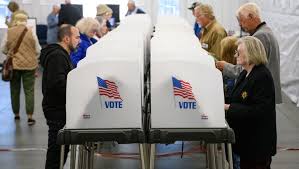
The DoJ is now suing 22 different jurisdictions nationwide.
A total of 10 states have either complied with the DoJ's requests for voter-roll information or are in the process doing so. The latest states to signal their intention to provide the requested information are Louisiana, Mississippi and Tennessee.
Assistant Attorney General Harmeet K. Dhillon, who leads the Civil Rights Division, said the lawsuits are about ensuring election integrity.
"The law is clear: states need to give us this information, so we can do our duty to protect American citizens from vote dilution," she said.
"Regardless of which party is in charge of a particular state, the Department of Justice will firmly stand on the side of election integrity and transparency."
The DoJ has the backing of Congress, the National Voter Registration Act (NVRA) and the Help America Vote Act (HAVA). It has also invoked the Civil Rights Act of 1960, which empowers the federal government to inspect voter-registration records.
As noted by The Post Millennial, "The four newly filed lawsuits add to a growing list of legal actions against states and jurisdictions that have resisted turning over voter registration data. Over the past year, the DOJ has filed similar suits against multiple states, arguing that refusal to comply with the law violates federal statute and undermines election transparency.
"While some states have challenged the DOJ's authority or sought to impose conditions on data access, the department has maintained that states do not have discretion to deny or delay compliance. States that have chosen to cooperate, DOJ officials say, have framed the process as collaborative, allowing federal analysts to review records and share findings so election officials can improve voter roll accuracy."
Back at the beginning of November, a district judge ruled the Trump admin cannot require proof of citizenship for voters.
Judge Colleen Kollar-Kotelly prohibited election officials from updating the federal voter-registration form to require proof of citizenship, despite federal law prohibiting non-citizens from voting.
In an Executive Order issued in March, President Trump direct the Election Assistance Commission to change the form to require proof of citizenship, such as a US passport.
In an 81-page opinion, the Judge said Trump lacks the authority to change federal election procedures.
"Because our Constitution assigns responsibility for election regulation to the States and to Congress, this Court holds that the President lacks the authority to direct such changes," she wrote.
Abigail Jackson, a White House spokeswoman, said in response, "President Trump has exercised his lawful authority to ensure only American citizens are casting ballots in American elections… We expect to be vindicated by a higher court."