










Breaking News
6.5x55 Swedish vs. 6.5 Creedmoor: The New 6.5mm Hotness
Best 7mm PRC Ammo: Hunting and Long-Distance Target Shooting
 Christmas Truce of 1914, World War I - For Sharing, For Peace
 The State's Last Stand
Top Tech News
 EngineAI T800: Born to Disrupt! #EngineAI #robotics #newtechnology #newproduct
 This Silicon Anode Breakthrough Could Mark A Turning Point For EV Batteries [Update]
 Travel gadget promises to dry and iron your clothes – totally hands-free
 Perfect Aircrete, Kitchen Ingredients.
 Futuristic pixel-raising display lets you feel what's onscreen
 Cutting-Edge Facility Generates Pure Water and Hydrogen Fuel from Seawater for Mere Pennies
 This tiny dev board is packed with features for ambitious makers
 Scientists Discover Gel to Regrow Tooth Enamel
 Vitamin C and Dandelion Root Killing Cancer Cells -- as Former CDC Director Calls for COVID-19...
 Galactic Brain: US firm plans space-based data centers, power grid to challenge China



6.5x55 Swedish vs. 6.5 Creedmoor: The New 6.5mm Hotness
The 6.5 Creedmoor and 6.5x55mm Swedish Mauser are two centerfire rifle cartridges that fire the exact same 6.5mm bullets – but were developed over 100 years apart. This begs the question: Does the 6.5 Creedmoor really do anything better than the old Swedish workhorse? Or is it only cool because it's new (and, let's face it, American)?
In this article, we will compare 6.5 Swedish vs. 6.5 Creedmoor so you can understand their differences and decide which is better for your target shooting and/or big-game hunting needs.

What Is the Difference Between 6.5x55 Swedish and 6.5 Creedmoor?
The main difference between the 6.5x55 Swedish and 6.5 Creedmoor is this: The 6.5x55 is longer and fits into a long-action rifle, while the 6.5 Creedmoor is shorter and fits into a short-action rifle. The 6.5 Swedish also has slightly greater case capacity than the 6.5 Creedmoor.
Cartridge Specs

One major difference between the 6.5 Swede and the 6.5 Creedmoor are their case lengths. The 6.5 Creedmoor case measures 1.920" in length; the Swedish round; 2.165". The 6.5 Swedish is the longer of the two overall, measuring 3.150" compared to 2.825" for the 6.5 Creedmoor.
That difference in overall length means the 6.5 Creedmoor will fit into a short action (similar to that of a 308 Winchester), whereas the 6.5x55 fits into a standard or long action (like a 30-06 Springfield).
Hunters often prefer a short action over a longer one because it is lighter. The bolt throw of a short action is also less than that of a standard action, meaning follow-up shots from a 6.5 Creedmoor rifle will typically be slightly faster than those from a 6.5 Swede.
The difference in case length bears directly on case capacity. The 6.5 Swedish has a greater case capacity: 57.9 grains H2O, as opposed to the 6.5 Creedmoor's 52.5 grains H2O.
Although the 6.5 Swedish has a higher case capacity, the 6.5 Creedmoor is designed for modern rifles and can handle higher pressures than the Swedish round. SAAMI specifies that the 6.5 Creedmoor can generate max pressure of 62,000 psi – almost 22% higher than the Swede's 51,000 psi.
Although these rounds were developed over a century apart, they both fire the same 6.5mm bullets (noted for their high ballistic coefficients and long-range shooting capabilities). Both rounds fire bullets between 100 and 150 grains, although 140 grain bullets are by far the most popular for either.
Recoil
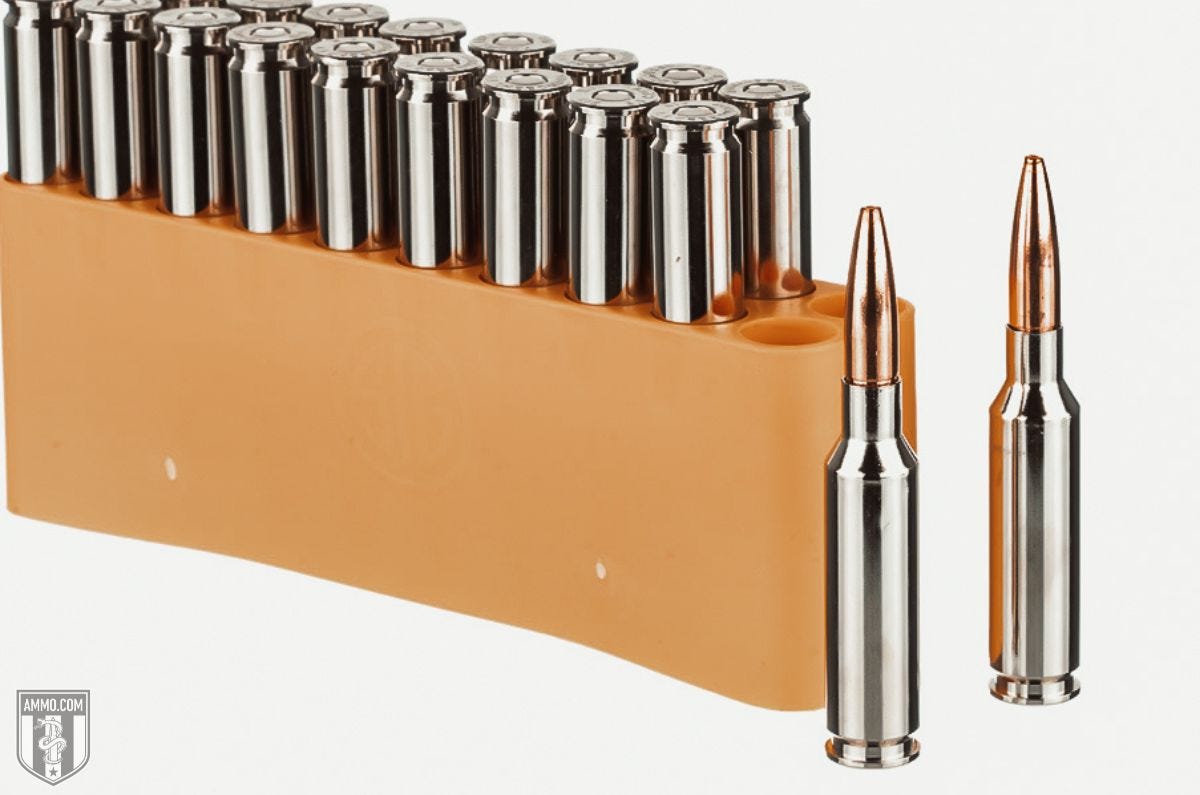
For the purpose of the most apples-to-apples comparison possible, we will consider two Sellier & Bellot 140 grain FMJ cartridges: one for either round. The 6.5 Creedmoor load has a muzzle velocity of 2,657 fps: higher than 2,582 fps for the 6.5 Swede.
Let us assume both test rifles are 6.8-pound Winchester Model 70s. Given those parameters, the 6.5 Creedmoor generates free recoil of 15.3 ft-lbs – higher than 14.7 ft-lbs for the 6.5 Swede. Although the 6.5 Swedish technically has slightly less recoil, even the most recoil-sensitive shooter couldn't tell the difference.
In general, the 6.5 Swedish and 6.5 Creed have roughly equivalent recoil.
Muzzle Velocity, Kinetic Energy, and Trajectory

Many long-range shooters claim that 6.5 Creedmoor ballistics are superior to virtually any comparable round. The seasoned Scandinavian hunter scoffs at such claims as he gestures to a wall of trophies taken by his trusty 6.5x55.
Let's see which rifle cartridge has an edge in terms of ballistics, objectively.
For this comparison, we will select two of each cartridge: 6.5x55 Swedish Lapua 155 grain SP and 140 grain AccuBond; and 6.5 Creedmoor 143 grain ELD-X and 156 grain Elite Hunter.
There are many other factory loads we could have selected for this comparison. However, we felt that these represent some of the most popular options.
Looking at the 6.5 Swedish vs. 6.5 Creedmoor ballistic table above, we see some impressive numbers across the board for both rifle cartridges.
In terms of muzzle velocity, the 6.5 Creedmoor rules the roost with the top two slots: 2,700 fps for the 143 grain ELD-X, and 2,680 fps for the 156 grain Elite Hunter. However, the 6.5 Swedish 140 grain AccuBond is a mere 30 fps slower than the Elite Hunter, clocking in at 2,650 fps. The 155 grain Lapua SP had the lowest muzzle velocity at 2,559 fps.
The Creedmoor was more efficient at conserving its velocity over long distances. Both rounds averaged around 1,500 fps at 1,000 yards. The AccuBond was only slightly slower at 1,252 fps, while the SP bullet had become thoroughly subsonic at 1,000 fps by 1,000 yards.
The story repeats itself when it comes to muzzle energy, as the 6.5 Creedmoor boasts a slight advantage there as well. The Elite Hunter had the highest muzzle energy at 2,488 ft-lbs. The ELD-X came in second at 2,315 ft-lbs. The two Swede cartridges measured 2,254 ft-lbs (Lapua SP) and 2,183 ft-lbs (AccuBond).
At 1,000 yards, both Creedmoor rounds remained above 650 ft-lbs of kinetic energy. The Swedish rounds fell below 500 ft-lbs at the same range.
In terms of short-to-medium range trajectory, both rounds were relatively equivalent out to 500 yards. The 6.5 Creedmoor rounds exhibited -53.8" and -54" of bullet drop for the 143 and 156 grain loads, respectively. The 6.5 Swede 140 grain AccuBond was relatively close to the 6.5 Creedmoor rounds with -60" of bullet drop at 500 yards. The 155 grain SP had the steepest bullet drop at -73.9".
At 1,000 yards, the differences between the 6.5 Creedmoor and 6.5 Swedish become even more pronounced. The 6.5 Swedish 140 grain bullet dropped approximately -60" more at 1,000 yards than the Creedmoor 143 grain load. The Lapua SP had the worst bullet drop at -539.2".
What conclusions can we draw from these data?
The one blatantly obvious thing is that bullet selection really matters with these rounds. As both 6.5mm cartridges can fire the exact same bullets, you generally see similar performance from a 6.5 Swedish firing the same bullet as the 6.5 Creedmoor.
One issue with the 6.5 Swede is its maximum pressure, which is considerably lower than that of the 6.5 Creedmoor. It's important to remember that the max pressure for the 6.5 Swedish was set using a Swedish Mauser: an antique which cannot handle higher pressures like modern rifles can. That's the main reason why the 6.5 Creedmoor's ballistics are a little better. It pushes its bullet faster.
If we only consider factory ammo loaded with similar bullet weights, the 6.5 Creedmoor will come out on top most of the time. However, if you handload 6.5x55, then you should see similar performance from both 6.5mm cartridges.
Hunting

The 6.5 CM and 6.5x55 are both excellent choices for your next big game hunting rifle.
Scandinavian hunters began favoring the 6.5x55 cartridge for its effectiveness on reindeer and moose shortly after its release in 1894. It packed enough kinetic energy and stopping power to get the job done on big game, and laid out the flat trajectory every hunter likes.
Read the full breakdown here https://ammo.com/comparison/6.5x55-vs-65-creedmoor