










Breaking News
 Quantum walkie-talkie: China tests world's first GPS-free radio for border zones
 RIGHT NOW!: Why was lawyer Van Kessel, of the civil case on the merits in the Netherlands, arrested?
 PENSION FUNDS PANIC BUYING SILVER – Ratio Below 60 Triggers $50B Wave (Danger Next Week)
 Dollar set for worst year since 2017, yen still in focus
Top Tech News
 EngineAI T800: Born to Disrupt! #EngineAI #robotics #newtechnology #newproduct
 This Silicon Anode Breakthrough Could Mark A Turning Point For EV Batteries [Update]
 Travel gadget promises to dry and iron your clothes – totally hands-free
 Perfect Aircrete, Kitchen Ingredients.
 Futuristic pixel-raising display lets you feel what's onscreen
 Cutting-Edge Facility Generates Pure Water and Hydrogen Fuel from Seawater for Mere Pennies
 This tiny dev board is packed with features for ambitious makers
 Scientists Discover Gel to Regrow Tooth Enamel
 Vitamin C and Dandelion Root Killing Cancer Cells -- as Former CDC Director Calls for COVID-19...
 Galactic Brain: US firm plans space-based data centers, power grid to challenge China



peak oil theory
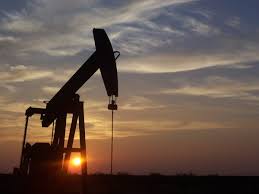
"Conventional" oil sources are easily accessible deposits produced by traditional onshore and offshore wells, from which oil is removed via natural pressure, mechanical walking beam pumps, or well-known secondary measures such as injecting water or gas into the well in order to force oil to the surface. The peak oil theory does not apply to so-called unconventional oil sources, which include oil sands, oil shales, oil extracted after fracking "tight rock" formations, and oil found in deepwater wells far offshore—in short, any deposit of oil that requires substantial investment and labour to exploit.
Proponents of peak oil theory do not necessarily claim that conventional oil sources will run out immediately and create acute shortages, resulting in a global energy crisis. Instead, the theory holds that, with the production of easily extractable oil peaking and inevitably declining (even in formerly bounteous regions such as Saudi Arabia), crude-oil prices are likely to remain high and even rise further over time, especially if future global oil demand continues to rise along with the growth of emerging economies such as China and India. Although peak oil theory may not portend prohibitively expensive gasoline any time soon, it does suggest that the days of inexpensive fuel, as were seen for more than a decade after the collapse of OPEC cartel prices in the mid-1980s, will probably never return.
The first person to advance the peak oil theory publicly was Marion King Hubbert, an American geoscientist who worked as a researcher for the Shell Oil Company from 1943 to 1964 and taught geophysics at Stanford University and other institutions. At a meeting of a branch of the American Petroleum Institute in 1956, Hubbert presented a paper in which he depicted U.S. petroleum production on a bell curve, starting from zero in the late 19th century, peaking between 1965 and 1975 at roughly 2.5 billion to 3 billion barrels per year (or approximately 6.8 million to 8.2 million barrels per day), and declining thereafter just as quickly as it had grown until production slows to 19th-century levels after 2150. Hubbert further predicted that global crude-oil production, assuming untapped reserves of 1.25 trillion barrels, would peak about the year 2000 at roughly 12 billion barrels per year (some 33 million barrels per day), decline quickly after that, and eventually disappear in the 22nd century.
Hubbert's theory for U.S. production was on the mark, as 1970 proved to be the peak year for oil-well production in that country, at approximately 9.64 million barrels of crude oil per day (compared with some 6.4 million barrels per day in 2012). Whether Hubbert was accurate about the global crude-oil production peak is a more controversial topic. Some analysts argue that a peak was indeed reached in the early 2000s. Others counter that the world has not yet reached peak production, that Hubbert seriously underestimated undiscovered oil reserves (especially in the Arctic, South America, and Sub-Saharan Africa), and that extracting methods have greatly improved productivity, enabling producers to get more oil out of declining wells than Hubbert was able to predict in 1956.