










Breaking News
 Tiny under-scalp implant could restore lost senses through prostheses
 Tim Walz responds to Minnesota fraud scandal after Kash Patel says new claims of stolen taxpayer...
 Trump casually confirms first land strike on plant in Venezuela: 'We knocked that out'
 The End Game Has Begun For Our Current Financial System
Top Tech News
 EngineAI T800: Born to Disrupt! #EngineAI #robotics #newtechnology #newproduct
 This Silicon Anode Breakthrough Could Mark A Turning Point For EV Batteries [Update]
 Travel gadget promises to dry and iron your clothes – totally hands-free
 Perfect Aircrete, Kitchen Ingredients.
 Futuristic pixel-raising display lets you feel what's onscreen
 Cutting-Edge Facility Generates Pure Water and Hydrogen Fuel from Seawater for Mere Pennies
 This tiny dev board is packed with features for ambitious makers
 Scientists Discover Gel to Regrow Tooth Enamel
 Vitamin C and Dandelion Root Killing Cancer Cells -- as Former CDC Director Calls for COVID-19...
 Galactic Brain: US firm plans space-based data centers, power grid to challenge China



When Law Becomes Variable, Trust Hardens into Silver and Gold -- as the World Discovers the Cost...
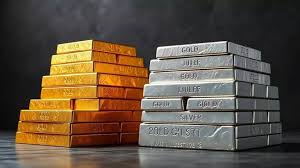
Gold at $4,546 an ounce. Silver printing $79+, with a peak around $80 in the last ten days. That isn't a metals rally blip. It's the sound of the market dragging a metal detector across the foundation of the post-WWII order and hearing a hollow thud.
Because this is not really about inflation hedges or safe havens in the tidy textbook sense. This is about trust, the rarest commodity on Earth, and how quickly the illusion evaporates once governments treat finance as a battlefield and law as an instrument of alignment rather than a neutral rulebook.
And here's the part polite finance avoids saying out loud: the "price" is mostly discovered in paper, futures, forwards, and ETFs, where claims can multiply faster than deliverable metal. That paper depth can dampen signals… until it can't. Which is exactly why the real tell isn't the headline quote, it's who is quietly converting the system's promises into something the system cannot cancel. China's reported official gold is now about 2,305 tonnes, Russia's about 2,329.6 tonnes, India's about 880, Poland's about 515, and the direction of travel matters more than the month-to-month noise.
It also matters where that paper price is made. The global gold and silver benchmark is still discovered inside a Western financial architecture, dollar-settled futures in New York, opaque OTC clearing in London, and ETF structures governed by Anglo-American law. That system excels at liquidity and leverage, but it was never built to answer the question sanctions have made unavoidable: who actually controls the metal when politics intrudes? In a world where access can be frozen and rules rewritten, financial claims become conditional. Physical possession does not. That is why the quiet accumulation by states outside the sanctioning core matters more than daily price prints, because ownership, not paper claims, is what ultimately survives regime shifts.
That distinction between paper abundance and physical control is no longer theoretical, it is now being enforced by states. What makes silver especially revealing is that its physical supply is now being explicitly gated by state power and timed with intent. On December 27, Beijing announced that all silver exports will require government licences starting January 1, 2026, a move rooted not in price management but strategic foresight. Silver is indispensable to energy systems, electronics, defense, and industrial processes the modern West cannot function without, yet Western policy remains trapped in quarterly paper cycles and financial abstractions. China is thinking in supply chains and leverage while the West remains fixated on paper liquidity and sanctions theater. By tightening physical outflows as prices surge, Beijing exposes the core illusion of the fiat era, that paper abundance can be printed, but necessity (physical supply) cannot and states that secure the real economy's inputs will shape the order that follows.
For decades, the dollar-euro system sold the world a simple promise: you can disagree with us politically and still settle, still bank, still hold reserves, still sleep. That promise wasn't altruism. It was the operating system of post-WWII globalization, the hidden bargain that made Western paper liquid across the planet.