










Breaking News
 Elon Musk says 'WOW' – Democrat California is going to be 100x the Democrat fraud of Minneso
 New scheme revealed: the Somali fraud story just exploded AGAIN…
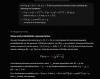 XAI Grok 4.20 and OpenAI GPT 5.2 Are Solving Significant Previously Unsolved Math Proofs
 Watch: World's fastest drone hits 408 mph to reclaim speed record
Top Tech News
 NASA announces strongest evidence yet for ancient life on Mars
 Caltech has successfully demonstrated wireless energy transfer...
 The TZLA Plasma Files: The Secret Health Sovereignty Tech That Uncle Trump And The CIA Tried To Bury
 Nano Nuclear Enters The Asian Market
 Superheat Unveils the H1: A Revolutionary Bitcoin-Mining Water Heater at CES 2026
 World's most powerful hypergravity machine is 1,900X stronger than Earth
 New battery idea gets lots of power out of unusual sulfur chemistry
 Anti-Aging Drug Regrows Knee Cartilage in Major Breakthrough That Could End Knee Replacements
 Scientists say recent advances in Quantum Entanglement...
 Solid-State Batteries Are In 'Trailblazer' Mode. What's Holding Them Up?



Underwater Auto Trade-Ins Reach Record Highs: Edmunds

In the fourth quarter of 2025, a record high of 27 percent of vehicle trade-ins involved negative equity of at least $10,000, Edmunds reported on Jan. 15. Just more than 17 percent of trade-ins involved loans with $10,000 to $15,000 of negative equity, while 9.2 percent of trade-ins had loan balances exceeding $15,000.
Negative equity on auto loans is commonly referred to as being "upside down" or "underwater," a situation where the vehicle is worth less than what's currently owed on the loan. Nearly 30 percent of all vehicles traded in during the fourth quarter of last year carried some amount of negative equity, Edmunds said. It's the highest amount of underwater loans on record since the first quarter of 2021, when nearly 32 percent of trade-ins carried negative equity.
The average negative equity of $7,214 that was rolled over into new auto loans in the fourth quarter was the highest amount ever recorded.
Ivan Drury, director of insights at Edmunds, said carrying negative equity into a new auto loan can be a difficult cycle to escape.
"Rolling debt forward may offer short-term relief, but it often leaves buyers with higher payments, and fewer options the next time they're in the market," Drury said in the report.
"Avoiding that cycle generally comes down to fundamentals: understanding how much a vehicle is worth relative to what's owed, choosing purchases that hold their value and align with long-term needs, and recognizing that focusing only on monthly payments can obscure the true cost of a purchase."
The all-time highs on upside down loans come at a time when more Americans are being approved for auto loans. According to Cox Automotive, the overall approval rates for auto loans in December 2025 jumped 90 basis points from a month earlier, to roughly 74 percent. Loans to riskier subprime borrowers—applicants with fair to poor credit scores—dipped slightly, to just more than 14 percent, Cox Automotive noted. However, subprime lending was still up by 230 basis points from year-ago figures.
Jonathan Gregory, senior manager for Cox Automotive's economic and industry insights team, said borrowers should take a broad view of total ownership costs when evaluating loan offers.
"Ongoing improvement in credit access, especially in both the new and used markets, continues to offer financing opportunities," Gregory said in a Jan. 12 analysis.
"While approval rates increased, the slight decline in down payments combined with longer loan terms may indicate stretched affordability."
The amount of down payment borrowers brought to auto loans dipped slightly in December, to 13.3 percent, Cox Automotive noted.
Edmunds said the imbalance in auto loans largely stems from loans taken out during the COVID-19 pandemic, when chip shortages led to a dearth of new-vehicle inventory and pushed automobile prices higher. As those borrowers seek to upgrade their vehicles, more are finding themselves significantly underwater, Edmunds said.