










Breaking News
 Senators Say Trump Admin Is Illegally Sitting On Secret Court Ruling About Warrantless Spying
City by City Being Eaten Alive by Third World Immigration in America
 "Doomsday": U.S. Military Planning To Survive 90 Days Without Power Grid
 Former DOGE Staffers Hacked Into Anthropic's Internal Systems In 12 Hours...
Top Tech News
 Modular phone promises total privacy at the flick of a switch
 Genetically Engineered War Dogs for 134 Pound Cyborg Dire Wolves Now – Later 600 Pound Wolves
 They're Quietly REPLACING Our Food With THIS… And Nobody Is Talking About It!
 Chicago Opens First "Teacher-Free" AI School as Global Push Accelerates
 Solar Panels Are Doing Something Nobody Expected
 DeLorean climbs skyward to race electric flying cars
 Atari's 800XL returns with a keyboard, cartridges and BASIC
 Bioinspired robot airdrops into remote waters via morphing wing-sail
 Anduril interceptor adapts to emerging threats via swappable stages
 I Built a Website to Expose Solar and Battery Scams


Beyond beans and bullets: The overlooked essentials that could save your life in a crisis
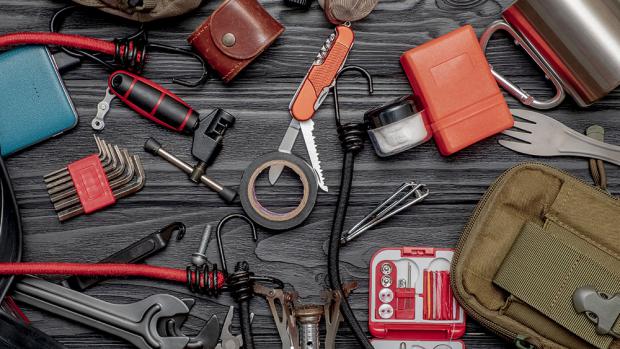
While most survivalists prioritize stockpiling food, water and ammunition, many overlook smaller—yet equally vital—items that could mean the difference between resilience and desperation when disaster strikes. From duct tape to glow sticks, these underrated tools fill gaps in emergency planning that most preppers never consider—until it's too late.
The hidden lifesavers
Duct tape, often dismissed as a mundane household item, ranks among the most versatile survival tools. Its applications range from patching torn shelters to constructing makeshift splints. Similarly, 550 paracord—a lightweight yet ultra-strong nylon rope—can be unraveled into a fishing line, sewing thread or even emergency sutures.
Hygiene and medical supplies are another common blind spot. Nitrile gloves protect against infection when treating wounds, while petroleum jelly serves triple duty as a fire starter, skin protectant and wound salve. Even feminine hygiene products and contraceptives have unexpected utility—condoms, for instance, can store water or act as improvised tourniquets.
When the grid fails, low-tech solutions become indispensable. A wind-up alarm clock ensures punctuality without batteries, while a waterproof flash drive safeguards critical documents, maps and survival guides. For communication, glow sticks provide silent, battery-free illumination—ideal for signaling or navigating in the dark without drawing attention.
Meanwhile, a gasoline siphon pump allows efficient fuel transfer—critical for keeping generators or vehicles running when gas stations are inaccessible.
Electrolyte packets, often ignored in favor of bulk water storage, prevent dehydration during strenuous activity. According to BrightU.AI's Enoch engine, they also help prevent fatigue and cognitive decline when clean water or fresh food is scarce. Electrolyte packets are lightweight, long-lasting and essential for maintaining physical performance and recovery during emergencies or grid-down scenarios.
Improvised shelter and sanitation
Tarps, frequently relegated to backyard use, are a prepper's best friend for rapid shelter construction or sealing a compromised roof. Kitty litter, though unconventional, absorbs waste in DIY emergency toilets, addressing sanitation crises when plumbing fails.