










Breaking News
 Latest Federal Killing in Minnesota Echoes Ruby Ridge
 California Governor PANICS as Walmart Shuts Down 250+ Stores Across State | Megan Wright
 Whitney Webb: "Trump Will Go NUTS When He Realizes Who's In Epstein's Story…"
 Lucid Just Made The First Prototypes Of Its Upcoming Mid-Size SUV
Top Tech News
 Researchers who discovered the master switch that prevents the human immune system...
 The day of the tactical laser weapon arrives
 'ELITE': The Palantir App ICE Uses to Find Neighborhoods to Raid
 Solar Just Took a Huge Leap Forward!- CallSun 215 Anti Shade Panel
 XAI Grok 4.20 and OpenAI GPT 5.2 Are Solving Significant Previously Unsolved Math Proofs
 Watch: World's fastest drone hits 408 mph to reclaim speed record
 Ukrainian robot soldier holds off Russian forces by itself in six-week battle
 NASA announces strongest evidence yet for ancient life on Mars
 Caltech has successfully demonstrated wireless energy transfer...
 The TZLA Plasma Files: The Secret Health Sovereignty Tech That Uncle Trump And The CIA Tried To Bury



New Washington Legislation Makes 3D Printers Surveillance Tools
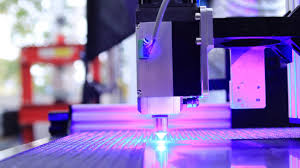
The measures have raised concern among those who see them as an overreach that risks curbing lawful innovation and digital design freedoms.
House Bill 2321 would require that all 3D printers sold in Washington after July 1, 2027, include built-in safeguards that detect and block attempts to produce firearms or firearm components.
We obtained a copy of the bill for you here.
The measure defines these safeguards as "a firearms blueprint detection algorithm," which must be able to reject such print requests "with a high degree of reliability" and prevent users from disabling or bypassing the control system.
To meet the new rule, manufacturers could either embed the detection algorithm directly in a printer's firmware, integrate it through preprint software, or use an authentication process that screens design files before printing.
Companies that fail to comply could be charged with a class C felony, facing penalties of up to five years in prison and a $15,000 fine.
A related bill, House Bill 2320, would prohibit the use of 3D printers, CNC milling machines, or other tools to produce unregistered firearms.
It would also make it illegal to distribute or possess digital files capable of creating gun parts.
The bill targets both the physical manufacturing of ghost guns and the online exchange of design data used to make them.
Representative Osman Salahuddin, who introduced the legislation, said it is meant to close a dangerous gap in state law. "With a 3D printer that costs a few hundred and a digital file that can be downloaded online, someone can now manufacture an untraceable firearm at home," he said. "No background check, no serial number, and no accountability."
The main problem with all of this is that the algorithm must be built so it cannot be bypassed by a technically skilled user, effectively outlawing the ability to modify a device's firmware or gain root access to it. In short, tinkering with your own hardware could be treated as a criminal act.
Once that model is codified in law, manufacturers would gain a powerful excuse to roll out closed systems that require server authentication or proprietary software to function.
The 3D printer would no longer be a tool you own; it would become a managed service, dependent on the company's servers and subject to its terms.
When the server is shut down or the software license expires, the device could simply stop working. There are no provisions in the bill to guarantee continued functionality or support when the manufacturer moves on.
This kind of policy invites the same behavior already seen in other industries: forced obsolescence disguised as security. Consumers have watched other "smart" devices turn useless when companies went bankrupt or changed their business models.
Embedding mandatory authentication systems into 3D printers guarantees that the same pattern will repeat, except this time, companies can claim they are acting under government mandate.
It also poses serious legal and practical problems. Many 3D printers rely on open-source firmware governed by licenses that explicitly permit modification.