










Breaking News
 Protecting Yourself in Protest Areas - Understanding the Government Surveillance Threats
 Origins of Egypt's Great Pyramid upended as new clues point to lost civilization from 20,000...
 Scam mafia kingpins put to death: China executes family behind empire that duped international...
 Damning new video shows Alex Pretti running at ICE agents and screaming in their faces before...
Top Tech News
 The smartphone just fired a warning shot at the camera industry.
 A revolutionary breakthrough in dental science is changing how we fight tooth decay
 Docan Energy "Panda": 32kWh for $2,530!
 Rugged phone with multi-day battery life doubles as a 1080p projector
 4 Sisters Invent Electric Tractor with Mom and Dad and it's Selling in 5 Countries
 Lab–grown LIFE takes a major step forward – as scientists use AI to create a virus never seen be
 New Electric 'Donut Motor' Makes 856 HP but Weighs Just 88 Pounds
 Donut Lab Says It Cracked Solid-State Batteries. Experts Have Questions.
 Researchers who discovered the master switch that prevents the human immune system...
 The day of the tactical laser weapon arrives


Origins of Egypt's Great Pyramid upended as new clues point to lost civilization from 20,000...
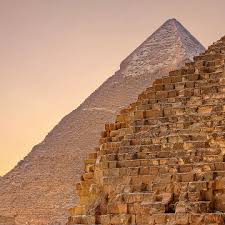
For more than a century, Egyptologists have dated the Great Pyramid to around 2580 BC, about 4,600 years ago.
A controversial new study now claims the monument could be tens of thousands of years older.
Italian engineer Alberto Donini from the University of Bologna said erosion patterns at the pyramid's base suggest it may have been built between 20,000 and 40,000 years ago, far earlier than the conventional timeline.
Donini's Relative Erosion Method (REM) estimated the pyramid's age by comparing how much erosion occurred on stones exposed since construction with nearby stones whose exposure time is known.
By measuring the difference in wear, he calculated how long the older stones have been exposed, producing dates that far exceed traditional estimates.
The study, which has not yet been peer-reviewed, examined twelve points around the pyramid's base. Some measurements suggested tens of thousands of years of erosion, with the average pointing to roughly 25,000 years.
Donini also proposed that Pharaoh Khufu may have renovated the pyramid rather than built it, potentially revising assumptions about its original authorship.
If the dates proposed by Donini are accurate, the Great Pyramid could predate not only the reign of Khufu but also the rise of any known advanced civilizations, raising fundamental questions about human history and architectural knowledge in the distant past.
The Great Pyramid of Giza, the largest of the three pyramids on the Giza Plateau, was built by Pharaoh Khufu during Egypt's Fourth Dynasty.
It sits alongside the Pyramid of Khafre, the Pyramid of Menkaure and the Great Sphinx, all shrouded in mystery due to their precise alignment, unusual construction methods, and debated purpose.
The new study measured erosion at twelve points around the base of the Great Pyramid of Khufu.
At each point, Donini compared limestone surfaces that had been exposed since the pyramid's construction with adjacent surfaces that were only exposed after the outer casing blocks were removed about 675 years ago.
He measured the volume of eroded material on both surfaces and calculated a ratio, which allowed him to estimate how long the older stones had been exposed.
Each point produced a different age, ranging from about 5,700 to over 54,000 years.
However, the average suggested a 68 percent probability that the pyramid was built between roughly 11,000 and 39,000 years ago, with an overall average of about 24,900 years.