










Breaking News
 The Vain Struggle to Curb Congressional Stock Trading
The Tesla Model S Is Dead. Here's Why It Mattered
 America's First Car With Solid-State Batteries Could Come From This Little-Known EV Maker
 POWERFUL EXCLUSIVE: Learn Why Silver, Gold, & Bitcoin Plunged After JD Vance Announced...
Top Tech News
 How underwater 3D printing could soon transform maritime construction
 Smart soldering iron packs a camera to show you what you're doing
 Look, no hands: Flying umbrella follows user through the rain
 Critical Linux Warning: 800,000 Devices Are EXPOSED
 'Brave New World': IVF Company's Eugenics Tool Lets Couples Pick 'Best' Baby, Di
 The smartphone just fired a warning shot at the camera industry.
 A revolutionary breakthrough in dental science is changing how we fight tooth decay
 Docan Energy "Panda": 32kWh for $2,530!
 Rugged phone with multi-day battery life doubles as a 1080p projector
 4 Sisters Invent Electric Tractor with Mom and Dad and it's Selling in 5 Countries



Tesla Has A New, Cheaper Model Y. Will It Work?
Welcome back to Critical Materials, your daily roundup for all things electric and tech in the automotive space.
One note for our regular readers: Starting next Monday Feb. 9, the full Critical Materials roundup will only be available as a newsletter. Sign up below to get our EV news and analysis in your inbox each morning.
On today's agenda: Tesla launched a new cheaper Model Y—but is it enough? Plus, Volvo says its EVs are profitable, and Rivian's mysterious robotics venture takes shape.
Tesla's answer to sagging sales over the last couple of years has generally been: "How about another Model Y?" It makes some sense, as the crossover is Tesla's best seller by far and the most popular electric vehicle on the planet. But it's not clear how much farther Tesla can get by relying so heavily on one model.
Last year, Tesla launched its first refresh of the Model Y in a bid to boost sales. It also rolled out a stretched-out Model YL in China. In October, Tesla unveiled the "new" and "more affordable" models it had been working on. The "Standard" Model 3 and Model Y were basically the same EVs as before, but with cheaper materials, no FM radio and, in the case of the Y, downgraded styling.
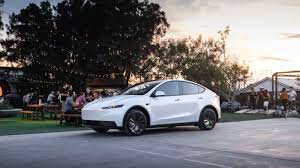
Last month, the automaker brought back a seven-seat Model Y to the U.S. market. That brings us to Tuesday, when the EV maker quietly began selling an all-wheel drive take on that stripped-down Model Y. (It also nixed the "Standard" lingo.) The Model Y All-Wheel Drive retails for $41,990 and returns 294 miles of EPA-estimated range. I'll let Iulian Dnistran explain the rest.
Tesla loves throwing more Model Y trims at its problems. But is that enough to keep the EV maker relevant in the auto market long term? Industry analysts doubt it, arguing that what Tesla really needs are actual new models.
The numbers back that up. Despite all the efforts I mentioned above, Tesla's global vehicle deliveries dropped by 8.6% last year, taking revenue down as well. The fact that this new Model Y trim is all-wheel drive (as opposed to the original single-motor Standard cars) could give it a boost.
Now, you may argue that Tesla doesn't really want to be a car company anymore. And that's true by CEO Elon Musk's own admission. The cancellation of the legendary Model S and Model X to make room for Optimus robot production sealed the deal on that.
At the same time, Tesla said in its latest earnings report that it believes it can "win the autos market of the future." I'm not sure how you square that goal with Tesla's Model Y strategy.