










Breaking News
 The Vain Struggle to Curb Congressional Stock Trading
The Tesla Model S Is Dead. Here's Why It Mattered
 America's First Car With Solid-State Batteries Could Come From This Little-Known EV Maker
 POWERFUL EXCLUSIVE: Learn Why Silver, Gold, & Bitcoin Plunged After JD Vance Announced...
Top Tech News
 How underwater 3D printing could soon transform maritime construction
 Smart soldering iron packs a camera to show you what you're doing
 Look, no hands: Flying umbrella follows user through the rain
 Critical Linux Warning: 800,000 Devices Are EXPOSED
 'Brave New World': IVF Company's Eugenics Tool Lets Couples Pick 'Best' Baby, Di
 The smartphone just fired a warning shot at the camera industry.
 A revolutionary breakthrough in dental science is changing how we fight tooth decay
 Docan Energy "Panda": 32kWh for $2,530!
 Rugged phone with multi-day battery life doubles as a 1080p projector
 4 Sisters Invent Electric Tractor with Mom and Dad and it's Selling in 5 Countries



America's First Car With Solid-State Batteries Could Come From This Little-Known EV Maker
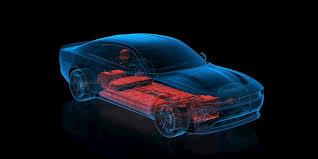
The electric vehicle transition has become a springboard for startups of all kinds, all trying to carve out a space for themselves in an increasingly competitive landscape.
?
One is California-based Karma Automotive. Born from Fisker Automotive's bankruptcy in 2014, Karma is now planning to launch several new electrified models over the next few years. At least one of them will use a form of solid-state batteries, the company said Thursday.
Karma says its first fully electric vehicle, the Kaveya, will arrive in 2027 and use semi-solid-state battery cells from Massachusetts-based Factorial Energy.
Solid-state batteries are widely seen as the holy grail of battery tech, and most car companies don't anticipate incorporating them until at least the end of this decade. But semi-solid-state batteries are just barely getting off the ground too, and there aren't any cars on sale in the U.S. that use them yet.
It may sound like an unexpected place for these bleeding-edge batteries to debut in the U.S.—not with Porsche or the like but with a relatively obscure, niche EV company. Karma CEO Marques McCammon told InsideEVs that the company's high-end, extremely low-volume positioning should help it be an enabler for solid-state tech.
"We're a three to five thousand unit per year type of manufacturer, and that's the perfect place to pilot new technologies," he said.
Before we get deeper into the company's EV plans and the Kaveya, it's worth stepping back and explaining what exactly Karma Automotive is.
When Fisker Automotive went bankrupt in 2014, Chinese conglomerate Wanxiang bought its assets and rebranded the company as Karma. This should not be confused with the much more recent bankruptcy of Fisker Inc., which was Henrik Fisker's second attempt at breaking into the EV market with the Ocean SUV.
Over the years, Karma has sold several iterations of its Revero extended-range electric vehicle (EREV). The four-door sedan looks nearly identical to the original Fisker Karma, though it features revised body panels and a different powertrain. Notably, it ditched the original GM-sourced EREV system in favor of one supplied by BMW.
The Revero, at least to this pair of eyes, still looks striking. Its final version rolled off Karma's production line in Moreno Valley, California, in December. The company says all of its vehicles are designed, engineered and built in the U.S., with a small engineering team in Detroit as well. None of the powertrain technology comes from China, McCammon said, even though the company is backed by a Chinese parent.