










Breaking News
 The Vain Struggle to Curb Congressional Stock Trading
The Tesla Model S Is Dead. Here's Why It Mattered
 America's First Car With Solid-State Batteries Could Come From This Little-Known EV Maker
 POWERFUL EXCLUSIVE: Learn Why Silver, Gold, & Bitcoin Plunged After JD Vance Announced...
Top Tech News
 How underwater 3D printing could soon transform maritime construction
 Smart soldering iron packs a camera to show you what you're doing
 Look, no hands: Flying umbrella follows user through the rain
 Critical Linux Warning: 800,000 Devices Are EXPOSED
 'Brave New World': IVF Company's Eugenics Tool Lets Couples Pick 'Best' Baby, Di
 The smartphone just fired a warning shot at the camera industry.
 A revolutionary breakthrough in dental science is changing how we fight tooth decay
 Docan Energy "Panda": 32kWh for $2,530!
 Rugged phone with multi-day battery life doubles as a 1080p projector
 4 Sisters Invent Electric Tractor with Mom and Dad and it's Selling in 5 Countries



The Vain Struggle to Curb Congressional Stock Trading
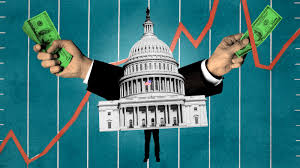
This practice raises serious concerns about insider trading, where legislators can leverage insights from committee briefings, closed-door meetings, or upcoming legislation to achieve returns that often outpace the broader market. Studies have shown that congressional portfolios frequently beat benchmarks like the S&P 500, with average returns for Democrats at 31% and Republicans at 26.1% in 2024, compared to the index's 24.9% gain.
Such advantages not only fuel (correct) perceptions of corruption but also undermine public confidence in government institutions, where trust is already at historic lows. The core issue stems from the inherent conflicts of interest. Lawmakers on committees overseeing sectors like finance, defense, or technology often trade stocks in those very industries. For instance, a New York Times investigation found that from 2019 to 2021, nearly one in five members of Congress reported trades in assets overlapping with their committee work.
While ordinary citizens face severe penalties for insider trading under federal securities laws, the framework for Congress has long been lax, allowing members to accumulate wealth in ways that ahem appear suspiciously timed.
The primary safeguard against congressional insider trading is the Stop Trading on Congressional Knowledge (STOCK) Act, signed into law by President Barack Obama in 2012. The legislation explicitly applies insider trading prohibitions to members of Congress, their staff, and other federal employees, barring them from using non-public information for personal profit. It also mandates disclosure of stock trades exceeding $1,000 within forty-five days (reduced from annual reporting), with filings made public through the Clerk of the House or Secretary of the Senate.
However, enforcement remains weak. Violations of disclosure rules carry a mere $200 fine for first offenses, a negligible sum for the overwhelming number of multimillionaire lawmakers. Not that it matters; literally no member has ever been prosecuted under the STOCK Act, despite numerous suspicious trades.
Further, routine non-compliance is rampant. For example, during the COVID-19 pandemic, lawmakers traded over $150 million in stocks amid private briefings on the crisis, yet faced no repercussions. Then there is the fact that the act's requirements apply to spouses and dependent children, but loopholes persist, such as delayed reporting that allows trades to go unnoticed for weeks.
Beyond the STOCK Act, the Ethics in Government Act (EIGA) requires annual financial disclosures, but these are often incomplete or filed late without meaningful consequences. House and Senate ethics committees, too, provide guidance on conflicts, but they lack the teeth for aggressive oversight. As a result, the system relies on self-policing, which has proven totally inadequate in deterring abuses.
Beyond high-profile cases, everyone is familiar with the all-too-true jest about former House Speaker Nancy Pelosi (D-CA) being a better investor than Warren Buffett, lesser-known members have demonstrated remarkable stock market success.
On Twitter/X, @QuiverQuant tracks such activities, highlighting active traders like Rep. Virginia Foxx (R-NC), who bought Ellington Financial stock in 2026 before it took off—the only congressional trade in that company. Then there was Senator Thomas Carper (D-DE), who loaded up on lithium stocks like Arcadium Lithium in 2024 while on a natural resources subcommittee, another unique trade. Then there was then-Rep. John Curtis (R-UT) sold up to $840,000 across 56 trades in 2023, including timely sales of First Republic Bank before its collapse. Senator Sheldon Whitehouse (D-RI) sold Veralto stock in 2023 while on the Environment Committee, echoing his pre-2008 crisis sales.