










Breaking News
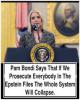 Pam Bondi says that if we prosecute everybody in the Epstein Files, the whole system will collapse
 Dr Pollan at Harvard has cured schizophrenia using keto diet
 We are winning. Big Pharma is finding it too difficult to get new vaccines approved under Trump
 Abortion drugs discovered in Bill Gates' vaccines
Top Tech News
 Drone-launching underwater drone hitches a ride on ship and sub hulls
 Humanoid Robots Get "Brains" As Dual-Use Fears Mount
 SpaceX Authorized to Increase High Speed Internet Download Speeds 5X Through 2026
 Space AI is the Key to the Technological Singularity
 Velocitor X-1 eVTOL could be beating the traffic in just a year
 Starlink smasher? China claims world's best high-powered microwave weapon
 Wood scraps turn 'useless' desert sand into concrete
 Let's Do a Detailed Review of Zorin -- Is This Good for Ex-Windows Users?
 The World's First Sodium-Ion Battery EV Is A Winter Range Monster
 China's CATL 5C Battery Breakthrough will Make Most Combustion Engine Vehicles OBSOLETE



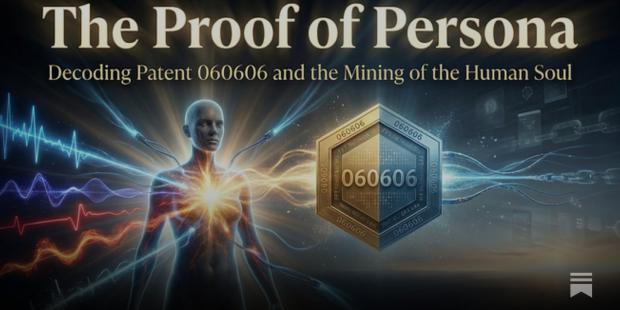
The Proof of Persona: Decoding Patent 060606 and the Mining of the Human Soul
TL;DR:
• What it is: A 2020 Microsoft patent (WO2020060606A1) proposes using "human body activity data" (physiological signals) as proof-of-work for cryptocurrency validation—potentially even "unconsciously."
• What it converges into: Tokenization, the Internet of Bodies, and technocratic metaphysics converge into a program that treats involuntary physiological response as economic input—shifting proof-of-work toward proof-of-response and, ultimately, proof-of-compliance.
• Why it matters: If access and reward depend on acceptable signatures, rights drift into permissions. This architecture opens a pathway to business models where biometric or behavioral data could be integrated into authentication, rewards, or payment systems (via blockchain or similar ledgers)—turning "who you are/what you do" into an always-on credential. Defending cognitive liberty means recovering a view of the person as real before and beyond any measuring apparatus or validation server.
Bottom line: When the body becomes the credential, the ledger becomes a referee.