










Breaking News
 Bessent Pulls Trigger On Using Frozen Funds To Reimburse Gulf Allies: 'Iran Will Pay'
 ActBlue CEO Pleads The Fifth During House Panel Hearing
 A Historic Energy Squeeze Is Locked In: U.S. Oil Inventories Have Fallen For 7 Weeks In A Row...
 USPS Proposes Halting Mail Ballot Delivery To States That Refuse Voter Roll Verification
Top Tech News
 NUCLEAR ENGINE - UNLIMITED LUXURY - 20 YEARS WITHOUT REFUELING
 China Unveils Nuclear-Powered Floating Hub For Green Shipping
 China Launches World's 1st Commercial Brain Chip, Beating Elon Musk's Neuralink!
 Modular next-gen US nuclear reactor goes critical
 How EMF's cause disease
 This Company Will Add Phone, AirPod, and Smartwatch Trackers to License Plate Readers
 Elon Details SpaceX AI Data Center in Space Details and Roadmap
 5-in-1 miniature surgical robot is the size of a seed
 Every hard drive you own will die.
 Flying car industry turns to solid-state batteries for commercial takeoff



China Unveils Nuclear-Powered Floating Hub For Green Shipping
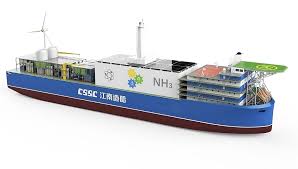
The concept, unveiled by Jiangnan Shipyard, combines port infrastructure, energy generation, and cargo handling into a single floating facility aimed at reducing emissions in maritime transport.
The project was presented at the Posidonia International Shipping Exhibition in Greece.
The SCMP writes that the platform would rely on a molten salt reactor as its primary energy source, supplemented by renewable technologies including solar and wind power. It would also feature systems for hydrogen production, synthetic green fuels, and electricity distribution. According to the company, the facility could generate clean power and fuels such as ammonia for both terminal operations and electric support vessels.
Jiangnan argues that molten salt reactor technology offers significant safety benefits because it is resistant to conventional meltdown scenarios and the coolant solidifies quickly if released, limiting the potential impact of leaks.
Designed to support international shipping lanes, coastal transport links, and cargo transshipment, the floating hub could also be replicated at other strategic ports thanks to its modular design.
The proposal builds on Jiangnan's ongoing work in nuclear-powered shipping. In 2024, the company revealed plans for a large container vessel powered by a thorium-based molten salt reactor. Meanwhile, Chinese scientists have continued advancing the technology, recently demonstrating a successful conversion of thorium into uranium fuel within a molten salt reactor system. Thorium is widely viewed as a more abundant alternative to conventional uranium fuel.