










Breaking News
 Bessent Pulls Trigger On Using Frozen Funds To Reimburse Gulf Allies: 'Iran Will Pay'
 ActBlue CEO Pleads The Fifth During House Panel Hearing
 A Historic Energy Squeeze Is Locked In: U.S. Oil Inventories Have Fallen For 7 Weeks In A Row...
 USPS Proposes Halting Mail Ballot Delivery To States That Refuse Voter Roll Verification
Top Tech News
 NUCLEAR ENGINE - UNLIMITED LUXURY - 20 YEARS WITHOUT REFUELING
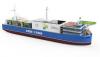 China Unveils Nuclear-Powered Floating Hub For Green Shipping
 China Launches World's 1st Commercial Brain Chip, Beating Elon Musk's Neuralink!
 Modular next-gen US nuclear reactor goes critical
 How EMF's cause disease
 This Company Will Add Phone, AirPod, and Smartwatch Trackers to License Plate Readers
 Elon Details SpaceX AI Data Center in Space Details and Roadmap
 5-in-1 miniature surgical robot is the size of a seed
 Every hard drive you own will die.
 Flying car industry turns to solid-state batteries for commercial takeoff



Modular next-gen US nuclear reactor goes critical
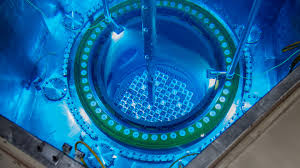
The milestone, achieved on June 4, 2026, was what is known as "initial criticality" or "zero-power fueled criticality," which means the reactor was only brought to the minimum power level required to start a nuclear chain reaction. The goal is to validate the reactor's computational physics models, core geometry, control rod performance, and initial neutronic behavior without generating significant thermal energy or requiring active coolant flow.
That may sound a bit like the equivalent of getting a car engine to turn over for the first time, and the analogy is not a bad one. But the important part is that it directly fulfills a mandate under the US Department of Energy's Reactor Pilot Program that challenged the US nuclear industry to bring at least three advanced reactor designs to criticality by July 4, 2026.
The initiative is intended to help jump-start the US nuclear sector, which largely stagnated after the 1970s due to shifting public opinion, political pressure, and increasingly stringent regulations that prioritized safety above all else. The result was an approval process so complex and costly that it was almost impossible to navigate without going bankrupt. Launched in 2025, the Reactor Pilot Program seeks to fast-track a new generation of reactors by using the DOE's independent safety authorization and oversight process at federal laboratory sites rather than the standard Nuclear Regulatory Commission (NRC) commercial licensing pathway for early-stage technology validation.
One of several program candidates, the planned Antares R1 reactor and its zero-power testing predecessor, the Mark-0, are high-temperature, solid-state microreactors designed to generate between 100 kW and 1 MW of electricity. Their modular design allows the reactors to built in factories and then shipped to where they are needed for activation, while additional modules can be added to meet growing power demands.
The Antares reactors are fueled by High-Assay Low-Enriched Uranium (HALEU) formed into Tri-structural Isotropic (TRISO) fuel particles roughly the size of millet seeds. These contain uranium-235 formed into uranium oxycarbide that's been enriched to 19.75% and then encapsulated in layers of carbon and ceramic before being pressed into cylindrical compacts and loaded into the reactor's core blocks.
This configuration helps make the nuclear reactor inherently self-regulating and highly resistant to meltdown, even at extreme temperatures. In addition, the pebbles can be fed into the top of the hopper-like reactor core and then removed when spent at the bottom, making refueling relatively easy.
But what sets the Antares reactors apart is that they are cooled by liquid-sodium heat pipes. These sealed steel tubes contain no pumps or moving parts. Instead, heat from the reactor causes the sodium to vaporize and travel to a heat exchanger, where it condenses before returning to the core via capillary action through an internal wick structure. According to the company, this passive system can continue cooling the reactor even during a complete loss of electrical power.