










Breaking News
 Arch-Technocrat Billionaires Pouring Fortunes Into Eternal Life
 WAYNE ROOT: A MOTHER'S DAY PLEA TO PRESIDENT TRUMP:
 I Improved MPGs by 22.4%! Don't Get Scammed and Do What Works!
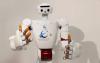 Mom? Dad? Would You Like A Robot To Take Care Of Your Needs?
Top Tech News
 New York Mandates Kill Switch and Surveillance Software in Your 3D Printer ...
 Cameco Sees As Many As 20 AP1000 Nuclear Reactors On The Horizon
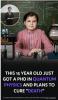 His grandparents had heart disease.
At 11, Laurent Simons decided he wanted to fight aging.
His grandparents had heart disease.
At 11, Laurent Simons decided he wanted to fight aging.
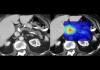 Mayo Clinic's AI Can Detect Pancreatic Cancer up to 3 Years Before Diagnosis–When Treatment...
A multi-terrain robot from China is going viral, not because of raw speed or power...
 The World's Biggest Fusion Reactor Just Hit A Milestone
 Wow. Researchers just built an AI that can control your body...
 Google Chrome silently installs a 4 GB AI model on your device without consent
 The $5 Battery That Never Dies - Edison Buried This 100 Years Ago
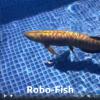 That is not a real fish. IT'S A ROBOT.


Mom? Dad? Would You Like A Robot To Take Care Of Your Needs?
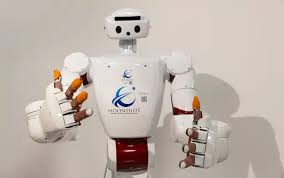
"I am going to scan you now," it says, as its eyes track from one end of the bed to the other, capturing every detail of my body.
The robot reaches down gently, positioning one mechanical hand under my shoulder and the other at my knee. It then rolls me from my back onto my side. It is a demonstration of one of many tasks that can be performed by the Airec caregiving robot, along with putting on socks and changing nappies.
Far from science fiction, robots could one day perform a vital role at a time of crisis in Japan, taking on critical care responsibilities for the oldest and most vulnerable members of society.
Airec – meaning AI-driven Robot for Embrace and Care – was developed by scientists at the Future Robotics Organisation (FRO) at Waseda University, Tokyo, specifically to care for the elderly as the country faced an acute demographic crisis.
Japan has one of the world's oldest populations, with a record number of citizens aged 100 or older and almost a third of its population aged 65 or older.
Britain's population is ageing fast, too: the number of people aged 80 or older is expected to double over the next 40 years, while the population of under-20s will decrease.
Many countries are facing a similar predicament, but few are as close to breaking point as Japan, which is not only battling a rapidly shrinking population, but also a steep decline in nurses and carers.
To solve the problem of a reduced caring workforce and an expanding elderly population, Japan's government has turned to robots to make up the shortfall. It is funding scientists to explore automation as an alternative to human care-givers.
Despite the urgent need, would elderly people even want to be cared for by robots?
Several pensioners who spoke to The Telegraph said they were open to having a robot look after them in their old age, but they disliked the idea of it performing intimate tasks, such as bathing
We spent a week with Japan's leading automation researchers and observed robots in action. Most malfunctioned in some way while performing critical tasks.
Airec, for example, struggled to locate my foot accurately when putting on a sock unless it was at a specific angle. With a population as vulnerable as the elderly, all issues must be fixed.
Terauchi Takashi, who manages Vihara Jujo nursing home in Kyoto, said: "The risk is high when caring for the elderly.
"For example, there is a specific amount of food that has to be given and at a specific pace, which varies from meal to meal. If anything goes wrong, an elderly person could choke and die."
There is, though, still time: scientists do not expect robots to be in nursing homes or hospitals in Japan for at least a decade.