










Breaking News
 Arch-Technocrat Billionaires Pouring Fortunes Into Eternal Life
 WAYNE ROOT: A MOTHER'S DAY PLEA TO PRESIDENT TRUMP:
 I Improved MPGs by 22.4%! Don't Get Scammed and Do What Works!
 Mom? Dad? Would You Like A Robot To Take Care Of Your Needs?
Top Tech News
 New York Mandates Kill Switch and Surveillance Software in Your 3D Printer ...
 Cameco Sees As Many As 20 AP1000 Nuclear Reactors On The Horizon
 His grandparents had heart disease.
At 11, Laurent Simons decided he wanted to fight aging.
His grandparents had heart disease.
At 11, Laurent Simons decided he wanted to fight aging.
 Mayo Clinic's AI Can Detect Pancreatic Cancer up to 3 Years Before Diagnosis–When Treatment...
A multi-terrain robot from China is going viral, not because of raw speed or power...
 The World's Biggest Fusion Reactor Just Hit A Milestone
 Wow. Researchers just built an AI that can control your body...
 Google Chrome silently installs a 4 GB AI model on your device without consent
 The $5 Battery That Never Dies - Edison Buried This 100 Years Ago
 That is not a real fish. IT'S A ROBOT.


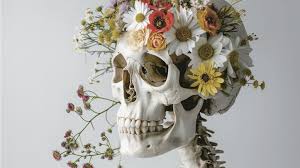
Arch-Technocrat Billionaires Pouring Fortunes Into Eternal Life
As they walked, their steps cushioned by an embroidered carpet of red and gold, their retinues followed along behind in cheerful deference. Both emperors were 72 years old, about the age at which the people they ruled over typically died. Though neither spoke the other's language, they talked contentedly through their interpreters, of the possibility of cheating death.
At one point, the Chinese emperor remarked that while in the past it was rare for a person to live beyond 70, these days it was said that at 70, one was still a child. At this, the Russian emperor became more animated. It was possible now, he suggested, to take out an aging man's heart or liver and to replace it with a new organ, so that in spite of his advancing years, the man would become younger and younger, and perhaps even evade death entirely.
Then the exchange stops abruptly, like one of the fractured clay tablets on which the ancient Mesopotamian epic of Gilgamesh is etched, ending the narrative. This fragmentary form only adds to the strange intensity of the moment, the sense of being party to a scene we were not supposed to glimpse, in which some secret about the nature of power is hinted at.
Perhaps you saw this video last September, when it went viral: The two most powerful autocrats in the world — Xi Jinping and Vladimir Putin, both of whom have been heads of state for well over a decade, and neither of whom shows any signs of intending to relinquish that power — caught by an interpreter's hot mic discussing their own apparent shared desire for immortality.
The moment, though brief, felt lavishly overdetermined, rich in a kind of mythic political symbolism. Xi and Putin were walking toward Tiananmen Square, the ceremonial center of the world's emerging superpower and a place synonymous with the government's brutal suppression of dissent. For a brief euphoric moment in 1989, it seemed as if Chinese communism might pass into history, creating space for the birth of some new democratic possibility. And then the tanks rolled in, announcing the state's power as eternal and indivisible, the lives of its subjects as entirely disposable.
Over the past decade or so, democracy has been retreating against a rising tide of illiberalism and plutocracy. Power, in much of the world, is becoming more and more concentrated in the hands of a few authoritarian leaders and a small number of expansively ambitious tech billionaires. As average life expectancy has increased, inequality — in income and in access to health care — has widened. And amid all of this, the world's wealthiest and most powerful have developed a persistent hope, and perhaps even generated some small possibility, that death might be eradicated entirely, or pushed back so far that its existential force is diminished.
The fact of death is, famously, a source of terror and melancholy, but also one of consolation. Say what you like about historical dynasties, but even the worst of hereditary sovereigns couldn't rule from the grave. Henry VIII died in his mid-50s; Cesare Borgia barely made it into his 30s. Blunt instruments though they may have been, morbid obesity and syphilis played their roles as agents of change. If even the greatest tyrants must eventually die, there is always some hope for a better world, or at least a different one.