










Breaking News
 New Study Says Grain Beats Grass: Joel Salatin Responds
 Stop Paying for Concrete - This Japanese Method Turns Plain Sand Into Solid Stone
 Solar Panels Plus Farming? Agrivoltaics Explained
 Cool knot techniques
Top Tech News
 I Built a Website to Expose Solar and Battery Scams
 Whistleblower Issues Dire Warning: Rogue AI, Hacking Nuclear Programs...
 Multi-material insulation delivers up to 10,000 x the stiffness
 Anduril's plan to save US sub edge from China's undersea surge
 Researchers Develop AI 'Mind-Reading' Tool That Reconstructs What Your Eyes See
 Video: Dexterous robot hand learns the delicate art of silk embroidery
 The computer that can read your mind:
 Seven apps. One craft
 SHOCK CASE REPORT: Advanced Alzheimer's Patient Regains Speech, Memory, Mobility...
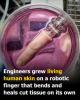 Most artificial limbs rely on silicone or plastic to mimic human hands.



Living 35 ft underground: inside a preserved Titan II nuclear missile silo
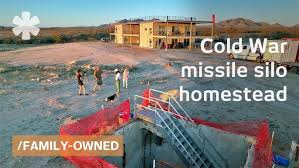
When the Cold War ended, nearly every missile silo in the country was destroyed and sealed with concrete. But Complex 571-7, the only intact Titan II complex left, was preserved by former missileers determined to keep their story alive.
We got to tour it exactly as it was on the day the program shut down: the bedroom, the kitchen, the command center with its analog punch-card computer, and the missile itself, frozen in time.
What struck us most wasn't just the history, but the conditions: the sound, the smell, the lighting, the suffocating weight of being buried deep underground. Our guide told us that for some, the claustrophobia and sensory deprivation were unbearable and that people have passed out just coming down.
We've now filmed three silo stories: the Cochise Stronghold Titan II complex 60 miles east of here (571-1); an Atlas silo completely excavated and transformed into a modern home; and this one preserved in its original Cold War state. Together, they tell the story of what it actually took to live underground, and how far people will go to reclaim extreme spaces as home.