










Breaking News
 Netanyahu Says Iran May Try To Disrupt Israeli Election With Attacks
 Trump Fires Another Salvo Into Israeli Politics As Netanyahu Neck-and-Neck With Gadi Eisenkot
 'Prison For Reich': Musk Slams Former Labor Secretary Over Commie Fever Dream To Nationalize
 Rubio Urges Cubans To Partner With CIA To Bring Change To Communist Country
Top Tech News
 Modular phone promises total privacy at the flick of a switch
 Genetically Engineered War Dogs for 134 Pound Cyborg Dire Wolves Now – Later 600 Pound Wolves
 They're Quietly REPLACING Our Food With THIS… And Nobody Is Talking About It!
 Chicago Opens First "Teacher-Free" AI School as Global Push Accelerates
 Solar Panels Are Doing Something Nobody Expected
 DeLorean climbs skyward to race electric flying cars
 Atari's 800XL returns with a keyboard, cartridges and BASIC
 Bioinspired robot airdrops into remote waters via morphing wing-sail
 Anduril interceptor adapts to emerging threats via swappable stages
 I Built a Website to Expose Solar and Battery Scams


Finland's Sand Battery Delivers Cheaper Heat with 70% Lower Emissions
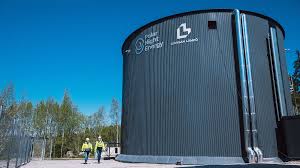
Tommi, Markku, Liisa, and Ville grew up in Tampere. They ran, rode, trained—and kept circling the same question: can you store heat in something nobody cares about?
They landed on sand. Not beach sand, but crushed soapstone: scrap from Finnish fireplace factories. Heat it to 600°C using excess wind and solar power. Hold that heat for weeks. When winter hits, push air through the hot mass and feed it into district heating.
In June 2025, Polar Night Energy started up the world's largest sand battery in Pornainen.
For about 5,000 residents, it delivers:
? 1 MW thermal power, 100 MWh storage
? 70% lower emissions
? No oil
? 60% less wood-chip burning
? $4–10 per kWh—far cheaper than lithium
No rare earths. No cobalt. No supply-chain drama. Just a pile of rock dust, insulation, and time.
Mayor Antti Kuusela says the biggest win is steadier district-heating prices, which helps the local economy.
Now look at the Middle East.
Sand is everywhere. Heat is brutal. Lithium-ion packs age faster in that climate. Yet money still floods into rare-metal storage.
Finland looked at fireplace waste and saw a heat plant.
If one town can do this, ten towns can copy it. A hundred towns can turn district heating into a buffer for wind and solar.
What's the ignored material in your industry that could do the boring, useful job better than the shiny stuff?