










Breaking News
 Jury Sides Against Musk in OpenAI Lawsuit
 Primaries Held In 6 States: What To Watch
 (VIDEO) Candace Owens to Release Interview with Hunter Biden
 The Forever War We Cannot Escape
Top Tech News
 Cars Are Fast Becoming Dystopian Prison Pods...
 Our Emergency Water Plan Wasn't Good Enough - So We Built This
 Sodium Ion Batteries Can Reach 100 Gigawatt Per Hour Per Year Scale in 2027
 Juiced Bikes proves capable electric motorcycles don't have to cost a lot
 Headlight projectors turn your car into a drive-in theater
 US To Develop Small Modular Nuclear Reactors For Commercial Shipping
 New York Mandates Kill Switch and Surveillance Software in Your 3D Printer ...
 Cameco Sees As Many As 20 AP1000 Nuclear Reactors On The Horizon
 His grandparents had heart disease.
At 11, Laurent Simons decided he wanted to fight aging.
His grandparents had heart disease.
At 11, Laurent Simons decided he wanted to fight aging.
 Mayo Clinic's AI Can Detect Pancreatic Cancer up to 3 Years Before Diagnosis–When Treatment...



America Stopped Building Ships. Now It Can't Build a Navy.
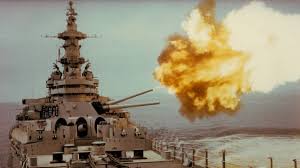
Mackenzie Eaglen and Representative Filemón Vela, writing for the National Commission on the Future of the U.S. Navy, recently outlined three priorities for rebuilding American sea power: bringing autonomous systems online faster, expanding investment in the maritime industrial base, and sparking a national dialogue on modern maritime strategy. These are the right priorities. But their framework will fail without confronting the structural failures that created the crisis in the first place. The United States does not have a shipbuilding spending problem. It has a shipbuilding planning problem, and more money alone will not fix it.
The United States builds fewer than ten oceangoing commercial vessels per year. U.S.-built merchant ships represent one percent of global commercial tonnage. China builds 75 percent of the world's commercial fleet. The People's Liberation Army Navy has surpassed the United States as the largest navy in the world by hull count. These numbers are not the product of a single administration's neglect, they are the result of three decades of structural policy failures compounding across procurement, workforce development, and institutional governance simultaneously.
How the Industrial Base Collapsed
The decline of American shipbuilding began not with a single policy failure but with a strategic choice made in the years after World War II. Having built the most powerful naval and commercial fleet in history, the United States gradually deprioritized commercial shipbuilding in favor of naval capacity, assuming the commercial sector would sustain itself. It did not. Japan and South Korea built heavily subsidized industries throughout the 1960s and 1970s, steadily undercutting American yards. The Construction Differential Subsidy program had offset up to 50 percent of the cost difference between U.S. and foreign-built vessels. Still, when the Reagan administration terminated it in 1981, the commercial market began to collapse. What followed was four decades of compounding deterioration. Shipyards lost the production scale to maintain modern facilities. Skilled trades workers retired and were not replaced. Apprenticeship pipelines dried up. The limiting factor is not budgetary. It is an industrial capacity that was allowed to erode over generations.