










Breaking News
 Jury Sides Against Musk in OpenAI Lawsuit
 Primaries Held In 6 States: What To Watch
 (VIDEO) Candace Owens to Release Interview with Hunter Biden
 The Forever War We Cannot Escape
Top Tech News
 Cars Are Fast Becoming Dystopian Prison Pods...
 Our Emergency Water Plan Wasn't Good Enough - So We Built This
 Sodium Ion Batteries Can Reach 100 Gigawatt Per Hour Per Year Scale in 2027
 Juiced Bikes proves capable electric motorcycles don't have to cost a lot
 Headlight projectors turn your car into a drive-in theater
 US To Develop Small Modular Nuclear Reactors For Commercial Shipping
 New York Mandates Kill Switch and Surveillance Software in Your 3D Printer ...
 Cameco Sees As Many As 20 AP1000 Nuclear Reactors On The Horizon
 His grandparents had heart disease.
At 11, Laurent Simons decided he wanted to fight aging.
His grandparents had heart disease.
At 11, Laurent Simons decided he wanted to fight aging.
 Mayo Clinic's AI Can Detect Pancreatic Cancer up to 3 Years Before Diagnosis–When Treatment...



The Forever War We Cannot Escape
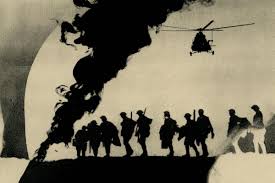
In the dusty streets of Mosul in the summer of 2003, an Iraqi lawyer pulled me aside on a street corner. The power was still out weeks after we had toppled Saddam Hussein's regime. "If you don't get the electricity back on soon," he told me, his voice low and urgent, "I will pick up a rifle and fight you." He wasn't an insurgent. He was a professional, a father, a man who had welcomed the end of Baathist tyranny. But he was also a realist. Basic services—electricity, water, order—were the difference between gratitude and armed resistance. That conversation has never left me.
A documentary and an oral history collection later confirmed what that lawyer understood instinctively. Molly Bingham and Steve Connors's 2007 documentary Meeting Resistance captured anonymous fighters in Baghdad describing how occupation frustrations turned ordinary Iraqis into insurgents. Mark Kukis's oral-history collection Voices from Iraq: A People's History, 2003–2009 recorded the same sentiment across nearly seventy interviews—with civilians, politicians like former Prime Minister Ayad Allawi, former dissidents, and the very militiamen who eventually took up arms. The message was consistent: populations do not wait patiently while outsiders debate policy. They react to the world they actually live in.
I spent twenty-five years in the U.S. Army, beginning as an enlisted soldier in Cold War Germany, earning a commission, serving multiple combat tours in Iraq and Afghanistan, and retiring as a Special Forces Lieutenant Colonel. I have seen policy made in Washington and executed—or mis-executed—on the ground. What I have learned is simple, if unfashionable: America will be engaged in conflict for as long as we remain a global power with global interests. "Forever war" is not a choice we can decline. It is the condition of our era. That condition has persisted regardless of official rhetoric. Despite the Obama administration's decision to drop the term "Global War on Terrorism," America has remained engaged in that war since 9/11 and almost certainly will be for decades to come. The evidence is relentless: in February of this year alone, CENTCOM conducted multiple rounds of strikes against more than 30 ISIS targets in Syria. Just days ago, U.S. and Nigerian forces eliminated Abu-Bilal al-Minuki, ISIS's global second-in-command. These are not isolated incidents; they are proof that the fight against jihadist networks is a persistent, global campaign that transcends any single administration's branding.