










Breaking News
 Economist Issues a Chilling Warning (You Should Prepare)
 The Internet Is Getting Harder to Trust | Josh Smith From #485 | The Way I Heard It
 DIY LFP Battery Explosion! Is it Possible??
 House Leadership Delays Vote on Ending the Iran War
Top Tech News
 Cars Are Fast Becoming Dystopian Prison Pods...
 Our Emergency Water Plan Wasn't Good Enough - So We Built This
 Sodium Ion Batteries Can Reach 100 Gigawatt Per Hour Per Year Scale in 2027
 Juiced Bikes proves capable electric motorcycles don't have to cost a lot
 Headlight projectors turn your car into a drive-in theater
 US To Develop Small Modular Nuclear Reactors For Commercial Shipping
 New York Mandates Kill Switch and Surveillance Software in Your 3D Printer ...
 Cameco Sees As Many As 20 AP1000 Nuclear Reactors On The Horizon
 His grandparents had heart disease.
At 11, Laurent Simons decided he wanted to fight aging.
His grandparents had heart disease.
At 11, Laurent Simons decided he wanted to fight aging.
 Mayo Clinic's AI Can Detect Pancreatic Cancer up to 3 Years Before Diagnosis–When Treatment...



Does Demand Create Supply?
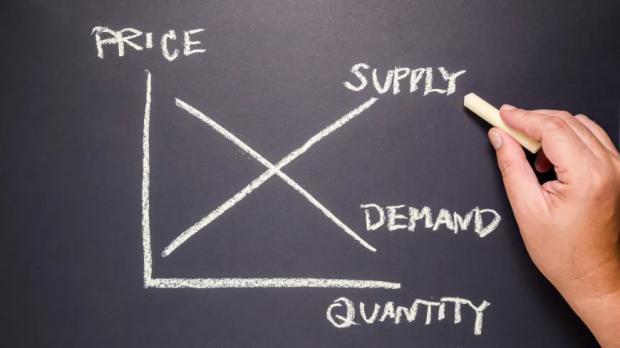
Since government is seen as an important part of total demand, what is then required is to increase government outlays, thereby lifting overall demand and hence increasing economic growth.
According to the popular view, it is also possible to strengthen overall demand through the inflationary increases in money supply. With more money in their possession, and for given prices, the so-called real balances will increase and this, in turn, will strengthen individuals' expenditure on goods and services. This allegedly will strengthen the economy's overall demand and will strengthen economic growth. A decline in the prices for a given money supply will also boost the real balances and thus the economic growth. But does it make sense that demand is the key driver of the economy?
In the free market economy, wealth-generators do not produce everything for their own consumption. Part of their production is used to exchange for the products of other producers. Hence, in the free market economy, production precedes consumption. This means that something is exchanged for something else. This also means that an increase in the production of goods and services sets in motion an increase in the demand for goods and services. According to David Ricardo,
'No man produces but with a view to consume or sell, and he never sells but with an intention to purchase some other commodity, which may be immediately useful to him, or which may contribute to future production. By producing, then, he necessarily becomes either the consumer of his own goods, or the purchaser and consumer of the goods of some other person.'