










Breaking News
 DOJ Moves to Dismiss Seditious Conspiracy Charges Against Eight Innocent Oath Keepers
 Federal Court Strikes Down Landmark Fluoride Ruling on Technicality - 'Not the Science'
 Iowa's cancer crisis is real: Radon, pesticides and industrial agriculture converge,...
 50 Non-Food Stockpile Necessities
Top Tech News
 Cars Are Fast Becoming Dystopian Prison Pods...
 Our Emergency Water Plan Wasn't Good Enough - So We Built This
 Sodium Ion Batteries Can Reach 100 Gigawatt Per Hour Per Year Scale in 2027
 Juiced Bikes proves capable electric motorcycles don't have to cost a lot
 Headlight projectors turn your car into a drive-in theater
 US To Develop Small Modular Nuclear Reactors For Commercial Shipping
 New York Mandates Kill Switch and Surveillance Software in Your 3D Printer ...
 Cameco Sees As Many As 20 AP1000 Nuclear Reactors On The Horizon
 His grandparents had heart disease.
At 11, Laurent Simons decided he wanted to fight aging.
His grandparents had heart disease.
At 11, Laurent Simons decided he wanted to fight aging.
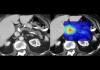 Mayo Clinic's AI Can Detect Pancreatic Cancer up to 3 Years Before Diagnosis–When Treatment...



Iowa's cancer crisis is real: Radon, pesticides and industrial agriculture converge,...
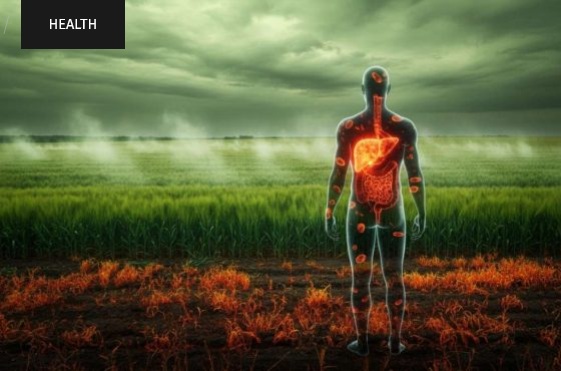
A grim medical reality is unfolding across Middle America, predominantly Iowa's farmland. In the land of pesticides and industrial agriculture, where policies have made farming dependent on cancer causing chemicals, cancer rates are rising faster than any other place in the nation. While federal regulators and agricultural conglomerates continue to insist that chemical-intensive farming practices pose no threat to human health, a growing coalition of oncologists, cancer survivors and investigative journalists is challenging that official narrative with data that is becoming impossible to ignore.
The convergence of multiple environmental carcinogens is turning Iowa into a public health warning for the entire country. Radon levels six times the national average. Nitrate contamination from fertilizer that routinely threatens drinking water supplies. Pesticide use that ranks fourth in the nation. PFAS chemicals detected in 94 percent of surface waters. These factors are not operating in isolation. They are building on one another in a state where 13 of 16 cancer sites linked to these pollutants already exceed national incidence rates.
Key points:
• Iowa has the second-highest rate of new cancers nationally and is one of only three states with rising cancer rates.
• A new 88-page report from the Iowa Environmental Council and Harkin Institute links pesticides, nitrate, PFAS and radon to the state's cancer crisis.
• Cancer incidence for people under 50 in Iowa is rising faster than the national average.
• Rural areas with heavy agricultural activity show significantly higher rates of leukemia, lymphoma and breast cancer.
• Glyphosate use in Iowa has more than tripled between 1999 and 2019.
• Radon exposure is estimated to kill more Iowans per year than drunk driving.