










Breaking News
 The Shocking Reason Your Backyard Is a Medicine Cabinet
 The Empire of Debt: How America's Financial Machine Became More Dangerous Than Its Enemies
 We're Being Held Hostage in a Technology Bubble (Documentary)
 Bryce Crawford - The Gen Z Evangelist Walking Into America's Darkest Subcultures | SRS #306
Top Tech News
 Cars Are Fast Becoming Dystopian Prison Pods...
 Our Emergency Water Plan Wasn't Good Enough - So We Built This
 Sodium Ion Batteries Can Reach 100 Gigawatt Per Hour Per Year Scale in 2027
 Juiced Bikes proves capable electric motorcycles don't have to cost a lot
 Headlight projectors turn your car into a drive-in theater
 US To Develop Small Modular Nuclear Reactors For Commercial Shipping
 New York Mandates Kill Switch and Surveillance Software in Your 3D Printer ...
 Cameco Sees As Many As 20 AP1000 Nuclear Reactors On The Horizon
 His grandparents had heart disease.
At 11, Laurent Simons decided he wanted to fight aging.
His grandparents had heart disease.
At 11, Laurent Simons decided he wanted to fight aging.
 Mayo Clinic's AI Can Detect Pancreatic Cancer up to 3 Years Before Diagnosis–When Treatment...



The Empire of Debt: How America's Financial Machine Became More Dangerous Than Its Enemies
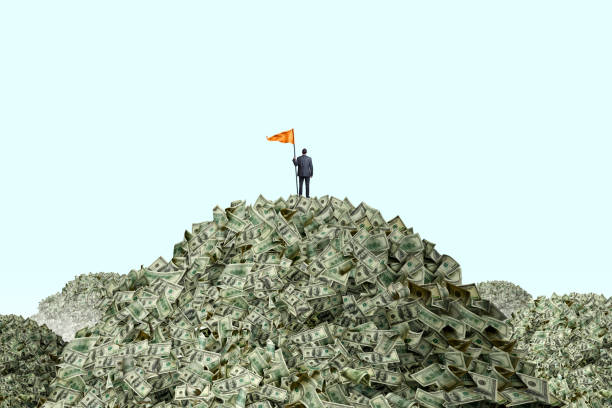
History, however, tells a colder and far more disturbing story. The strongest civilizations usually begin dying financially long before the population realizes anything irreversible has started. Military decline only becomes visible later, after the economic foundations supporting the empire have already begun cracking underneath the surface. Rome did not suddenly wake up one morning and discover barbarians had magically become stronger than the empire itself. Rome exhausted its own machinery through expansion, corruption, currency debasement, and unsustainable costs that eventually became impossible to maintain. The same pattern appeared centuries later inside the British Empire, which emerged victorious from world wars yet slowly realized it could no longer financially sustain global dominance. In every case, decline arrived disguised as normality for years before history finally admitted what was happening.
That is what makes the current American situation feel strangely unsettling in 2026. The United States still appears overwhelmingly powerful from the outside. It possesses the world's strongest military, the dominant reserve currency, the largest capital markets, unmatched technological influence, and enough geopolitical leverage to shape conflicts occurring thousands of miles away from its own borders. Yet beneath this image of stability, another reality is quietly expanding at a speed even many economists no longer fully understand. The official U.S. national debt has now moved beyond thirty-nine trillion dollars, while interest payments alone are approaching levels once considered economically absurd. Treasury projections and Congressional Budget Office estimates suggest America is now spending close to three billion dollars every single day merely servicing existing debt obligations. That means before roads are repaired, before healthcare programs are funded, before military operations are financed, before pensions are paid, and before schools receive money, billions already disappear automatically into the machinery of debt maintenance.