










Breaking News
 Founding Felons
 World's largest eVTOL just proved it can play nice with other flyers
 Shockingly low sale price of flagship Portland office building that shows woke city is still far...
 What will NASA's moon base look like? As the US space agency reveals plans to build...
Top Tech News
 Cars Are Fast Becoming Dystopian Prison Pods...
 Our Emergency Water Plan Wasn't Good Enough - So We Built This
 Sodium Ion Batteries Can Reach 100 Gigawatt Per Hour Per Year Scale in 2027
 Juiced Bikes proves capable electric motorcycles don't have to cost a lot
 Headlight projectors turn your car into a drive-in theater
 US To Develop Small Modular Nuclear Reactors For Commercial Shipping
 New York Mandates Kill Switch and Surveillance Software in Your 3D Printer ...
 Cameco Sees As Many As 20 AP1000 Nuclear Reactors On The Horizon
 His grandparents had heart disease.
At 11, Laurent Simons decided he wanted to fight aging.
His grandparents had heart disease.
At 11, Laurent Simons decided he wanted to fight aging.
 Mayo Clinic's AI Can Detect Pancreatic Cancer up to 3 Years Before Diagnosis–When Treatment...



The Quiet Collapse Under The Market's Surface...It's Getting Louder
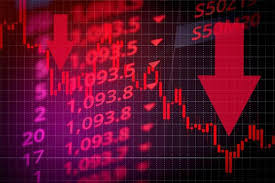
But beneath the geopolitical theater, a dangerous story continues to deteriorate quietly in the background: multiple areas are cracking in a way that looks increasingly systemic, and almost nobody wants to talk about it. But I won't shut up about it.
Why? Try this on for size. According to Fitch Ratings, the U.S. Private Credit Default Rate just hit another all-time high. Fitch reported that the trailing twelve-month private credit default rate rose to 6.0% for April 2026, up from 5.7% in March and the highest level since the firm began tracking the data in August 2024.
The model-based default rate climbed to a record 4.8%, while the privately monitored rating default rate remained an astonishing 9.7%. Those are accelerating cracks.
Fitch recorded 10 private credit default events in April alone, heavily concentrated in industrials, manufacturing, and business services. More importantly, the composition of those defaults matters. The majority were not traditional payment misses. Seven involved distressed maturity extensions, lenders kicking maturities one to two years down the road simply to avoid recognizing immediate failure. The remaining defaults largely involved borrowers introducing payment-in-kind interest structures instead of paying cash interest.
This isn't normal business operations for private credit. Instead it's like running a triage at an emergency room. Extending and pretending while hoping magic liquidity comes out of nowhere and saves the day is a strategy popular on Wall Street. The only problem is when that liquidity never arrives, the chaos is multiples larger than it would have been if these businesses had done the right thing years prior.
The most alarming detail from Fitch may be this: in the April trailing twelve-month period, Fitch counted 81 unique defaulters generating 99 separate default events — the highest number ever recorded since tracking began. More than half of all default activity came from interest deferrals or PIK structures replacing actual cash payments.
In plain English, companies are increasingly surviving by pretending they are solvent when they aren't.
Healthcare providers remain among the worst areas, while consumer products posted an extraordinary 11.1% default rate. Industrials and manufacturing surged to a 9.1% default rate, nearly doubling year-over-year. Fitch itself warned that prolonged Iran-related inflation pressure and higher energy costs could further weaken consumer demand and increase rating pressure on industrial issuers.
As I've written for the last year (at least), private credit was sold as a superior replacement for traditional banking risk. Investors were told that direct lenders had tighter covenants, better borrower visibility, superior workout flexibility, and floating-rate protection. What actually happened was a decade-long explosion of leverage financed by ultra-cheap money and dependent on permanently low defaults.
Now rates are higher, refinancing windows are shrinking, and many of these companies were never structurally viable at current borrowing costs.
I have already argued repeatedly that rates likely need to go higher from here because inflation pressures remain embedded throughout the system. The bond market understands this. Long-end yields continue to scream that inflation expectations are not anchored, fiscal credibility is deteriorating, and Treasury supply is becoming overwhelming. And the problem is simple: every additional increment higher in rates worsens private credit defaults materially.
A massive portion of these borrowers are floating-rate structures. Every basis point increase directly raises debt servicing costs for already fragile companies. Many sponsors are now choosing between injecting fresh equity into deteriorating businesses or simply extending and pretending until the market forces recognition.