










Breaking News
 Founding Felons
 World's largest eVTOL just proved it can play nice with other flyers
 Shockingly low sale price of flagship Portland office building that shows woke city is still far...
 What will NASA's moon base look like? As the US space agency reveals plans to build...
Top Tech News
 Cars Are Fast Becoming Dystopian Prison Pods...
 Our Emergency Water Plan Wasn't Good Enough - So We Built This
 Sodium Ion Batteries Can Reach 100 Gigawatt Per Hour Per Year Scale in 2027
 Juiced Bikes proves capable electric motorcycles don't have to cost a lot
 Headlight projectors turn your car into a drive-in theater
 US To Develop Small Modular Nuclear Reactors For Commercial Shipping
 New York Mandates Kill Switch and Surveillance Software in Your 3D Printer ...
 Cameco Sees As Many As 20 AP1000 Nuclear Reactors On The Horizon
 His grandparents had heart disease.
At 11, Laurent Simons decided he wanted to fight aging.
His grandparents had heart disease.
At 11, Laurent Simons decided he wanted to fight aging.
 Mayo Clinic's AI Can Detect Pancreatic Cancer up to 3 Years Before Diagnosis–When Treatment...



What will NASA's moon base look like? As the US space agency reveals plans to build...
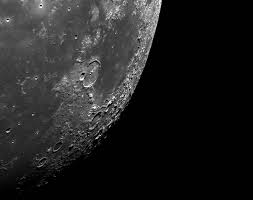
NASA has unveiled plans to construct a $20 billion moon base by 2032, giving humans their first permanent outpost on another celestial body.
But what will this 'city' on our lunar satellite look like?
The lunar outpost will initially be fairly basic, using a simple collapsible structure carried all the way from Earth.
However, as NASA's presence becomes more permanent, the small camp will soon expand into a sprawling modular metropolis.
Dr Simeon Barber, a lunar scientist from the Open University, told the Daily Mail that Antarctic research stations are a good comparison for NASA's moon base.
Just like a home on the moon, these remote habitats need to be self–sufficient, built with materials carried over long journeys, and to protect their inhabitants from harsh conditions.
But Dr Barber says that a moon base will also require 'specific requirements stemming from the unique circumstances at the moon'.
This means that NASA's moon base will probably end up as a widely spread collection of prefabricated modules, sprawling over hundreds of square miles.
On Tuesday, NASA Administrator Jared Isaacman laid out the agency's three–stage plan to build a permanent presence on the moon.
Between autumn this year and 2029, the agency will oversee up to 21 lunar landings to deliver scientific equipment and robotic scouts.
A fleet of MoonFall helicopter drones and uncrewed rovers will patrol the South Pole region, looking for sources of water and an ideal location for human settlement.
Between 2029 and 2032, the first humans will start to arrive, establishing basic infrastructure, habitation, and power supplies.
Finally, in 2032, NASA will move into the final stage of permanent occupation, establishing a full–time moon base with regular crew rotations and resupply landings.
Speaking at a press conference, Mr Isaacman identified the biggest challenge as the moon's astonishingly harsh conditions.
On the lunar surface, temperatures can swing from around 100°C (212°F) in the day to –100°C (–148°F) at night.
This is accompanied by the constant threat of radiation, impact from micrometeorites, and harmful clouds of choking lunar dust.