










Breaking News
 Founding Felons
 World's largest eVTOL just proved it can play nice with other flyers
 Shockingly low sale price of flagship Portland office building that shows woke city is still far...
 What will NASA's moon base look like? As the US space agency reveals plans to build...
Top Tech News
 Cars Are Fast Becoming Dystopian Prison Pods...
 Our Emergency Water Plan Wasn't Good Enough - So We Built This
 Sodium Ion Batteries Can Reach 100 Gigawatt Per Hour Per Year Scale in 2027
 Juiced Bikes proves capable electric motorcycles don't have to cost a lot
 Headlight projectors turn your car into a drive-in theater
 US To Develop Small Modular Nuclear Reactors For Commercial Shipping
 New York Mandates Kill Switch and Surveillance Software in Your 3D Printer ...
 Cameco Sees As Many As 20 AP1000 Nuclear Reactors On The Horizon
 His grandparents had heart disease.
At 11, Laurent Simons decided he wanted to fight aging.
His grandparents had heart disease.
At 11, Laurent Simons decided he wanted to fight aging.
 Mayo Clinic's AI Can Detect Pancreatic Cancer up to 3 Years Before Diagnosis–When Treatment...



Putin Authorizes Debt Relief To Lure New Ukraine War Recruits
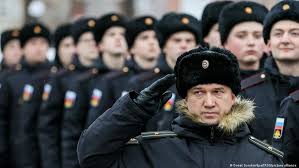
The debt exemption applies to any Russian citizen who signs a minimum one-year contract with the military to serve in Ukraine after May 1, 2026. The economic amnesty explicitly extends to an enlisted member's spouse as well - making it more attractive to struggling families.
The bill smoothly cleared Russia's parliament earlier this month prior to going to Putin's desk for final authorization. It represents the newest addition to a series of economic incentives designed to keep boots on the ground without triggering a domestic political crisis.
While an official death toll has not been issued or publicly maintained by the Kremlin, estimates commonly suggest deaths in the hundreds of thousands, or else a conservative estimate of high tens of thousands - after well over four-years of the tragic war.
Similar figures are often offered on the Ukrainian side, which even more obviously suffers from a severe manpower crisis, leading to forcible recruitment often through officers nabbing eligible men off the streets.
This fresh Kremlin debt forgiveness policy represents a new, softer and more incentive-based approach to military recruitment inside Russia. Prior 'partial' mobilizations have been deeply unpopular.
Within the opening years of the war, there were reports that hundreds of thousands of draft-age Russian men fled across international borders in order to escape these mobilization waves.
The pro-NATO Atlantic Council has meanwhile highlighted that Russia's military also fills manpower through controversial foreign recruitment methods:
The Kremlin plans to recruit at least 18,500 foreigners to fight in the Russian army in 2026, Ukrainian military intelligence officials claimed in late April. This figure represents a sharp rise in the annual recruitment of foreign nationals as Moscow seeks to continue the invasion of Ukraine amid heavy battlefield losses and domestic mobilization concerns.
Russia's efforts to enlist foreigners in the country's military are not new. Since the full-scale invasion of Ukraine began more than four years ago, at least 27,000 foreign nationals from more than 130 countries have signed up for service in the Russian army, according to a new report prepared jointly by Truth Hounds, the International Federation for Human Rights (FIDH), and regional partners.
The vast majority of these recruits have been drawn from economically deprived regions of the Global South.