










Breaking News
 What Comes After Thomas Massie? Meet Jose Vega
 "They will vaccinate you with DNA while you're not looking" Dr. McCullough exposes new
 'Personal chemistry' keeps U.S.-Russia reset alive as Putin-Trump bond defies 'backtrack
 Bright Videos News, June 12, 2026 - We Are Trapped in Trump's Time Loop Paradox:
Top Tech News
 NUCLEAR ENGINE - UNLIMITED LUXURY - 20 YEARS WITHOUT REFUELING
 China Unveils Nuclear-Powered Floating Hub For Green Shipping
 China Launches World's 1st Commercial Brain Chip, Beating Elon Musk's Neuralink!
 Modular next-gen US nuclear reactor goes critical
 How EMF's cause disease
 This Company Will Add Phone, AirPod, and Smartwatch Trackers to License Plate Readers
 Elon Details SpaceX AI Data Center in Space Details and Roadmap
 5-in-1 miniature surgical robot is the size of a seed
 Every hard drive you own will die.
 Flying car industry turns to solid-state batteries for commercial takeoff



Ministry Of Truth: UK Government To Block 'False Information' During 'Crisis Events'
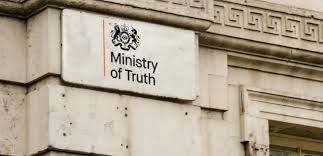
The latest move from Northern Ireland Secretary Hilary Benn makes explicit what privacy campaigners have long warned: the Online Safety Act is being weaponised far beyond any child-protection claim.
Benn confirmed that the internet regulator will now wield enhanced powers to tackle "false information" online during "times of crisis," directly tying the recent Belfast unrest to this framework. The regulator has already contacted platforms, with ministers asserting that violence "appears to have been incited online."
Benn stated that if people put online 'false information,' "it is not acceptable and it may well be a criminal offence depending on the circumstances as the chief constable made clear yesterday."
When asked how a "time of crisis" would be defined, Benn said it "will be set out in due course."
The unrest followed a serious knife attack on a local man by an asylum seeker and escalated into protests involving vehicle fires, arson attacks on homes, and clashes with police that injured a dozen officers.
In addition, Ofcom, the UK's regulator for communications, responsible for overseeing broadcasting, telecommunications and - since the passage of the Online Safety Act - the major online platforms, is now using its powers to direct platforms toward enhanced, crisis-specific moderation measures whenever it or ministers identify spikes in 'illegal 'harmful' content during whatever it deems a 'crisis' event.
An Ofcom open letter published this week directly addresses the Belfast situation. It states: "Following a serious knife attack that took place in Belfast on Monday night, we have seen civil unrest in the city, some of which appears to have been incited online. This has included racially motivated incidents of violence, arson attacks on homes and vehicles, and attacks against police."
The letter goes on to remind online service providers of their duties under the Online Safety Act 2023 to assess and mitigate risks of 'illegal' content, including material amounting to offences of stirring up hatred or provoking violence.
It emphasises that "previous crises have shown how a sudden increase in the amount of illegal content circulating online can manifest in hate crime and violence in the real world" and that "usual content moderation systems and processes may not be sufficient in such circumstances."