










Breaking News
 Dirty soda disaster: What's really hiding in that trendy drink
 Why the Coming YOUTH REVOLT is the Result of Central Bank Fiat Currency Printing
 Americans Suffer While Trump Fights for Israel
 US Empire Managers View Iranian Sovereignty as an Act of Aggression
Top Tech News
 NUCLEAR ENGINE - UNLIMITED LUXURY - 20 YEARS WITHOUT REFUELING
 China Unveils Nuclear-Powered Floating Hub For Green Shipping
 China Launches World's 1st Commercial Brain Chip, Beating Elon Musk's Neuralink!
 Modular next-gen US nuclear reactor goes critical
 How EMF's cause disease
 This Company Will Add Phone, AirPod, and Smartwatch Trackers to License Plate Readers
 Elon Details SpaceX AI Data Center in Space Details and Roadmap
 5-in-1 miniature surgical robot is the size of a seed
 Every hard drive you own will die.
 Flying car industry turns to solid-state batteries for commercial takeoff



Is The War Over (Again)?
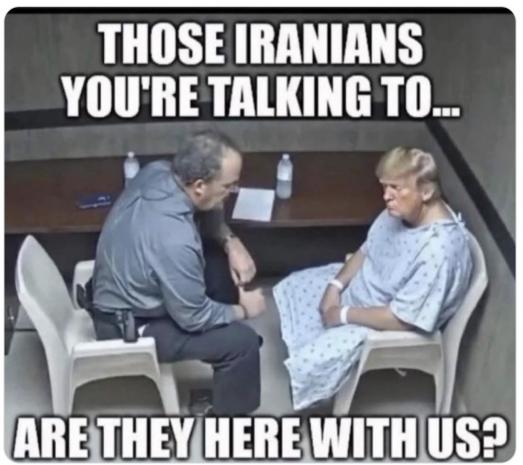
Trump – in the role of Charlie Brown – keeps trying to kick the football, which takes the form of a "deal" with the Iranians. Who aren't actually playing the role of Lucy because – apparently – they're not the ones holding the football.
Trump seems to be.
He says the U.S. has "ended the war." But what does that mean? The Iranians say that "nothing has been finalized" and that reports of a supposed "settlement" are "speculative," in the words Esmail Baghael, on behalf of Iran's Foreign Ministry. How can there be a "deal" when one side is not – apparently – a party to it?
It is a weird and wondrous thing. Also a repetitive thing – in that this is – what's the count? – yet another instance of Trump claiming the war is over or nearly over; that a "deal" is all-but-done. Maybe it is, this time. Maybe Charlie Brown will get to kick the football at last. It would be nice were that to happen and not only because this war serves no discernible American interest and has caused death and mayhem, which is always immoral when unjustified. But how likely is it that the Iranians will agree to a "deal" that amounts to a capitulation? Trump's demands are analogous to the unconditional surrender demanded of Germany by the United States toward the end of WW II, with the difference being the Germans were beaten. Their military and their economy were in ruins; allied troops had physically conquered most of Germany. The Germans had lost the power to effectively resist. They had no real choice but to surrender unconditionally and hope the allies would be merciful.
Iran does not appear to be in this position. There are no American troops in Tehran. Tehran appears to be perfectly capable of hitting back when it is hit. It still controls passage through the Strait of Hormuz, which means it still controls the flow of a large part of the world's supply of petroleum and other vital materials. Why would the Iranians agree to surrender those advantages? Why – above all of that – would the Iranians budge an inch on the issue of nuclear capabilities? If this war has taught the Iranians anything, it is that Israel – and so, effectively, the United States – will never abide a truly sovereign Iran. Meaning, an Iran that has the capability to meaningfully defend itself against Israel and the United States. A nuclear deterrent is the only thing that (so far) deters the regime-changers in Washington and Tel Aviv. Giving up that capability would be something like agreeing to disarm yourself before venturing into a neighborhood controlled by armed thugs. Something worse, actually – because in this case the thugs do not restrict themselves to their neighborhood.