










Breaking News
 Researchers at Johns Hopkins University just let an AI-guided robot remove a dead pig's gallblad
 The Multipolaristas' China-Maxxing
 Intelligence Agencies Warn Trump Israel 'Likely' to Undermine Iran Deal: Report
 20 Depression Era Food Preservation Skills the FDA Quietly Made Felonies
Top Tech News
 World's first consumer wing-in-ground effect aircraft takes flight
 America's Military Readiness Depends On Deployable Nuclear Power
 License Plate Cameras Are About To Start Tracking A Lot More Than Just Your Car
 Heads up: Apparently the government is hiding cameras inside fake utility boxes
 Sodium Batteries And EVs That Power The Grid: Inside GM's Big Energy Push
 NUCLEAR ENGINE - UNLIMITED LUXURY - 20 YEARS WITHOUT REFUELING
 China Unveils Nuclear-Powered Floating Hub For Green Shipping
 China Launches World's 1st Commercial Brain Chip, Beating Elon Musk's Neuralink!
 Modular next-gen US nuclear reactor goes critical
 How EMF's cause disease


License Plate Cameras Are About To Start Tracking A Lot More Than Just Your Car
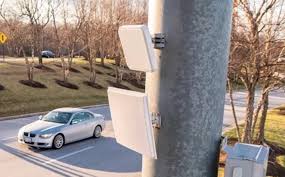
Automated license plate recognition systems have gotten a lot of flack from privacy activists in the United States recently—and rightfully so, according to the Electronic Frontier Foundation which argues that these systems erode basic civil liberties. As it turns out, tracking your license plate is just the start.
One player in the space, Leonardo, has a new trick up its sleeve. According to a new report from 404Media, Leonardo's SignalTrace system is coming to track the unique fingerprints that your other daily carry devices invisibly broadcast simply by being on your person. The company did not respond to the outlet's request for comment.
According to Leonardo's own product specs, SignalTrace helps to coordinate vehicle license plate with devices that emit signals through popular wireless protocols like Bluetooth. These are gadgets like your cellphone, AirPods, fitness trackers, and smartwatches. SignalTrace also advertises the ability to detect non-contact RFID devices—think the sensors in your tires that monitor air pressure, the badge you carry around for work, and even the microchip meant to keep your pet safe if they run away from home.
Here's how Leonardo describes the process:
As the devices emit signals, SignalTrace sites captures them and correlates them together, along with LPR data if present. The data collected shows what group of devices are travelling together. As part of investigations, algorithms can determine which specific mix of devices are predictably moving together. That specific mix of devices—linked by common time stamps and locations—are described as an electronic fingerprint and can aid in the identification of suspects or witnesses.
For example: while 70 cars in 100 may contain iPhones, only one will have an iPhone 13rev2, an Audi radio, a pair of Bose headphones, a Garmin sports watch, a key finder, and the license plate ABC-1234. The collection of data represented by these specific things is an electronic signature.
In other words, a driver's car—and the driver—can be tracked even if the driver "changes or removes a [license] plate," according to the company.
Leonardo says that the system uses "non-intrusive intelligence gathering" to detect publicly broadcasted device identifiers (like the custom hardware address in your phone's Bluetooth radio that is used to wirelessly pair with other devices). This allows the system to effectively fingerprint nearly any device equipped with a wide range of wireless radios.
It then feeds these data points its algorithm and, if it determines that multiple devices are moving together along with a vehicle, creates a link between the vehicle's plate, the vehicle, the device, and timestamped location data. All of the data is then stored in Leonardo's Enterprise Operations Center for future queries and analysis.