










Breaking News
 Former Federal Reserve Chairman Alan Greenspan Dies at 100
 US To Buy Iranian Oil - First Time In Decades!
 The Edison Motors shop floor is finished!
 Your Money Is About To Be Worth A Lot Less
Top Tech News
 World's first consumer wing-in-ground effect aircraft takes flight
 America's Military Readiness Depends On Deployable Nuclear Power
 License Plate Cameras Are About To Start Tracking A Lot More Than Just Your Car
 Heads up: Apparently the government is hiding cameras inside fake utility boxes
 Sodium Batteries And EVs That Power The Grid: Inside GM's Big Energy Push
 NUCLEAR ENGINE - UNLIMITED LUXURY - 20 YEARS WITHOUT REFUELING
 China Unveils Nuclear-Powered Floating Hub For Green Shipping
 China Launches World's 1st Commercial Brain Chip, Beating Elon Musk's Neuralink!
 Modular next-gen US nuclear reactor goes critical
 How EMF's cause disease


Speculations on What Could Show Physics Beyond the Standard Model
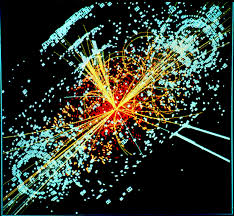
Post-spacetime physics refers to the idea that our familiar 4D spacetime is not fundamental but emerges from deeper structures—whether geometric (fiber bundles, higher-dimensional manifolds), quantum (entanglement, information), or vacuum effects. Eric Weinstein's Geometric Unity (GU) proposes a 14-dimensional geometric framework (involving a metric bundle over 4D spacetime) from which the Standard Model forces, gravity, and our observed spacetime derive via some Shiab operator and symmetry breaking. There is no evidence for any of the higher dimension theories or speculation. Mainstream physicists as not yet a workable theory.
Mike McCulloch's Quantized Inertia is a different proposal and theory. Inertia emerges from Unruh radiation (quantum vacuum fluctuations perceived by accelerating observers) modified by a Hubble-scale Casimir effect from cosmic horizons. This leads to acceleration-dependent inertial mass, explaining galaxy rotation curves without dark matter, certain anomalies (Pioneer, flyby), and predicting propellantless thrust in asymmetric cavities or high-acceleration setups.
The most plausible paths, ranked by near-term feasibility for some evidence of new physics.
1. Tabletop quantum gravity experiments succeed (strongest near-term candidate)
Proposals (Bose, Marletto-Vedral, Pikovski ) test whether gravity can entangle two quantum systems in superposition or mediate quantum correlations. A positive result would show gravity has quantum features and support models where classical spacetime emerges from quantum entanglement/information.
2. LISA (Laser Interferometer Space Antenna) or next-gen gravitational wave detectors reveal new physics
LISA (three spacecraft in solar orbit, ~2.5 million km arms) will detect low-frequency gravitational waves from supermassive black hole mergers, extreme mass-ratio inspirals (EMRIs), and potentially a stochastic background from the early universe.
Timeline: Launch targeted for mid-2030s (~2035); science operations shortly after. Data in the 2035–2045+ window.
Signatures of post-spacetime could include deviations from classical GR in strong fields, imprints of quantum gravity (emodified dispersion or echoes), or primordial signals inconsistent with standard inflation but fitting emergent/holographic cosmologies. Ground-based detectors (LIGO/Virgo upgrades, Einstein Telescope) add complementary data.