










Breaking News
 The current "UFO/UAP disclosure" campaign is not a grassroots or independent effort.
 Scientists Discover A 113-million-year-old Pterosaur Wing Preserved In Extraordinary Detail
 States Finally Begin to Roll Back Free Healthcare for Illegal Aliens
 Trump's ready to reopen mental institutions and liberals are furious…
Top Tech News
 Heads up: Apparently the government is hiding cameras inside fake utility boxes
 Sodium Batteries And EVs That Power The Grid: Inside GM's Big Energy Push
 NUCLEAR ENGINE - UNLIMITED LUXURY - 20 YEARS WITHOUT REFUELING
 China Unveils Nuclear-Powered Floating Hub For Green Shipping
 China Launches World's 1st Commercial Brain Chip, Beating Elon Musk's Neuralink!
 Modular next-gen US nuclear reactor goes critical
 How EMF's cause disease
 This Company Will Add Phone, AirPod, and Smartwatch Trackers to License Plate Readers
 Elon Details SpaceX AI Data Center in Space Details and Roadmap
 5-in-1 miniature surgical robot is the size of a seed


America's Military Readiness Depends On Deployable Nuclear Power
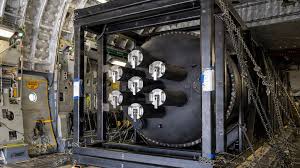
That era is over. The United States is entering a period where energy security must be recognized as a core pillar of national security and military readiness.
The global competition underway with China is not just about trade or tariffs. It is about industrial capacity, technological dominance, artificial intelligence (AI), semiconductor manufacturing, and defense production – all of which depend on a foundational requirement: abundant and reliable electric power.
America's future military superiority will rely in part by whether the nation can generate enough resilient, secure baseload electricity to support its defense industrial base and rapidly expanding digital infrastructure.
That is why deployment of Small Modular Reactors (SMRs) must be a top national priority.
The United States faces a convergence of unprecedented energy demand and an electric grid that is at capacity and is vulnerable to cyberattacks, physical sabotage, transmission bottlenecks, and extreme weather events.
Intermittent energy sources alone will not meet the scale or reliability requirements necessary to sustain America's strategic position. The nation requires dependable, 24/7 baseload power capable of supporting critical infrastructure under all conditions – including during natural disasters, geopolitical crises, or military conflicts.
Advanced nuclear energy, delivered by SMRs, is rapidly emerging as one of the few realistic solutions capable of meeting those demands on a shorter timeline than legacy power systems.
Unlike traditional large-scale nuclear plants, SMRs are designed to be smaller, factory manufactured, and more flexible in deployment. They can be built to support specific industrial facilities, defense installations, AI infrastructure, and in remote or constrained environments where grid reliability is a concern.
The national security implications are significant.
Modern military operations are increasingly energy intensive. Defense installations, logistics hubs, shipyards, semiconductor fabrication plants, weapons production facilities, and command and control infrastructure all depend on uninterrupted electricity. Yet many of these facilities remain dependent on centralized transmission systems vulnerable to disruption.