










Breaking News
 I carried my friend Charlie Kirk's mission onto US campuses. What Gen Z told me should...
 Michael Saylor Responds To Scrutiny As Strategy Shares & STRC Hit 52-Week Lows
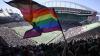 FIFA Folds, Allows Rainbow Flags To Fly In Seattle Stadium Despite Objections From Iran, Eqypt
 DOJ Finds USDA Preferences For 'Socially Disadvantaged' Farmers Discriminatory
Top Tech News
 'Groundbreaking' Potential Lupus Cure Sends Patients into Remission, Allowing Dreams...
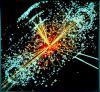 Speculations on What Could Show Physics Beyond the Standard Model
 SpaceX Orbital Travel and Orbital Hotels Need Starfall – Getting Back Safe and Cheap is Exciting
 Lizard-inspired wiggly wheels let Mars rover swim through sand
 Fact Sheet: President Donald J. Trump Ushers in the Next Frontier of Quantum Innovation
 Researchers at Johns Hopkins University just let an AI-guided robot remove a dead pig's gallblad
 World's first consumer wing-in-ground effect aircraft takes flight
 America's Military Readiness Depends On Deployable Nuclear Power
 License Plate Cameras Are About To Start Tracking A Lot More Than Just Your Car
 Heads up: Apparently the government is hiding cameras inside fake utility boxes



Kevin Warsh Just Took 30 Years of Fed Culture to the Wood-Chipper
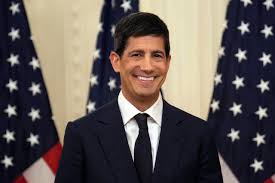
Yesterday marked the end of the first Federal Open Market Committee (FOMC) meeting under the Fed's new Chairman Kevin Warsh.
Warsh sent a major, and I mean MAJOR signal to the financial system that he intends to change the Fed in profound ways. If I'm brutally honest, detailing the context and significance of the proposed changes could easily fill an entire book. We don't have that much space on these pages. So, I'm going to try to provide a lot of context in a short amount of space.
Please bear with me.
Why the Fed Matters
The single most powerful entity in the financial system is the U.S. central bank, called the Federal Reserve, or the Fed for short.
The Fed controls the value of the reserve currency of the world: the U.S. dollar ($USD). It also controls the price of money in the financial system by targeting the yield at which U.S. debt, also called Treasuries trades. This is called the "risk free rate of return" against which all risk assets (stocks, real estate, commodities, etc.) are priced.
The Fed is so powerful it can stop a financial crisis in a matter of days (it literally stopped the COVID-Crash on a dime on March 23, 2020). It has even bailed out other central banks (the EU debt crisis).
Again, the Fed is the single most powerful entity in the financial system.
The Fed is tasked with two items:
Maximum employment.
Price stability (inflation).
Historically, the Fed has been something of a discreet entity. If you go back to the 1950s-1980s, rarely was the Federal Reserve in the media. Most Americans couldn't even name the Fed Chair. And even financial analysts didn't know the names of the seven members comprising the Fed's Board of Governors.
How the Fed Went From Quiet Economists to Fame-Obsessed Celebrities
This all changed in the 1990s. At that time, the Fed's culture, led by then-Fed Chairman Alan Greenspan began to step into the spotlight in unprecedented ways.
For one thing, the Fed intentionally turned a blind eye to the development of a clear stock market bubble: the Tech bubble. Between this and the introduction of online, discount brokers, America experienced its largest stock market bubble in history: a period in which the NASDAQ stock market index (an entire index, not an individual stock) more than tripled in the span of three years.