










Breaking News
 Smotrich Says Israel Has Plans Drawn Up To Establish Three Jewish Settlements in Gaza...
 Virginia's New Gun Laws are Already Costing Jobs
 FARA Docs: Israel is Spying On Millions Of Christian Americans In Their Churches
 Grand Theft World Podcast 293 | Neocon Maga Zombies with guest Matthew Ehret
Top Tech News
 Researchers in China are ignoring bug spray, citronella, and netting.
 Our bodies may be able to regrow lost limbs after all
 Chinese cars go blacker than black via hybrid nano tech
 World first: Human embryo model grows its own organs – in the lab
 Dead lithium batteries revived to 95% capacity via electrochemical bath
 Compact laser engraver levels up your DIY crafts setup
 'Groundbreaking' Potential Lupus Cure Sends Patients into Remission, Allowing Dreams...
 Speculations on What Could Show Physics Beyond the Standard Model
 SpaceX Orbital Travel and Orbital Hotels Need Starfall – Getting Back Safe and Cheap is Exciting
 Lizard-inspired wiggly wheels let Mars rover swim through sand



Johnson Says Reconciliation Is The Only Path For The SAVE Act
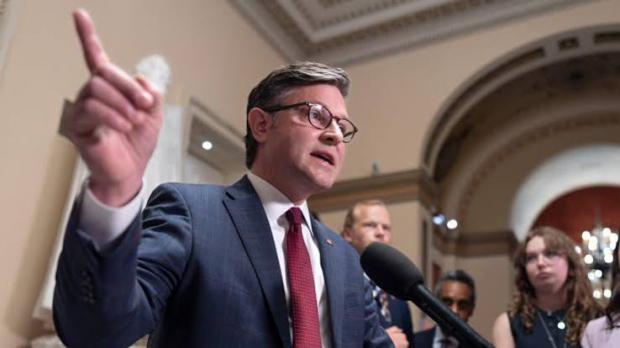
"The only way to get the SAVE Act to the president's desk, we've been shown many times, is to put it on a reconciliation bill, so that is in the process," Johnson said, adding that he believes a version of the measure would "clearly" comply with the Senate's Byrd Rule.
Earlier today, Punchbowl News' reported that House Republican leaders are considering a modified version of the bill structured as a $4 billion grant program. The grants would incentivize states to adopt citizenship verification and voter ID requirements for elections. The idea is still in its early stages, with no guarantee it will ultimately work or pass procedural hurdles.
This approach aims to frame the policy as a budgetary/spending matter, which is more likely to survive the Senate parliamentarian's review under the Byrd Rule.
The SAVE Act (Safeguard American Voter Eligibility Act) requires documentary proof of U.S. citizenship to register to vote in federal elections and photo identification to cast a ballot. The House has passed versions of the bill multiple times, but it has repeatedly stalled in the Senate due to the 60-vote filibuster threshold.
Republicans argue the measure strengthens election integrity and closes potential loopholes. Critics contend it is unnecessary (federal law already prohibits non-citizens from voting in federal elections), could create barriers for eligible voters, and amounts to voter suppression.
Reconciliation allows the majority party to pass budget-related legislation with a simple majority in the Senate. However, the Byrd Rule limits what can be included - non-budgetary or "extraneous" provisions are generally prohibited.
Bottom line: House Republican leaders, aligned with the White House, are actively exploring a reconciliation vehicle for a revised SAVE Act.