










Breaking News
 Steve Baker on the CIA, FBI, Directed Energy Weapons, and the Lies of the J6 Pipe Bomb Case
 Winning! Trump Now Rules Entire World As Supreme Court Declares Everyone Is American
 The Love of Lithium
 July 4, 2026
Top Tech News
 Our Diesel-Electric Truck Is So Quiet the Military Wants One
 World's first hotel entirely staffed by robots to open in 2027
 Researchers in China are ignoring bug spray, citronella, and netting.
 Our bodies may be able to regrow lost limbs after all
 Chinese cars go blacker than black via hybrid nano tech
 World first: Human embryo model grows its own organs – in the lab
 Dead lithium batteries revived to 95% capacity via electrochemical bath
 Compact laser engraver levels up your DIY crafts setup
 'Groundbreaking' Potential Lupus Cure Sends Patients into Remission, Allowing Dreams...
 SpaceX Orbital Travel and Orbital Hotels Need Starfall – Getting Back Safe and Cheap is Exciting



July 4, 2026
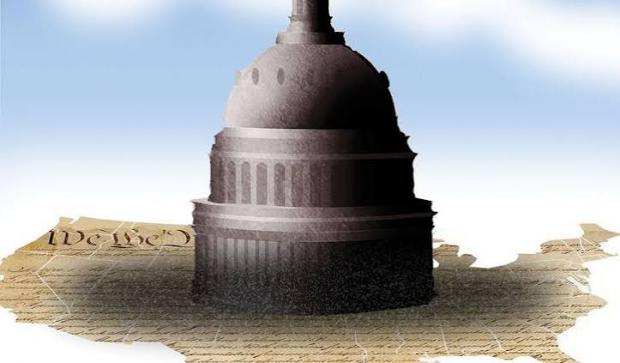
Does it really matter if the instrument curtailing liberty is a monarch or a popularly elected legislature? This conundrum, along with the witty version of it put to a Boston crowd in 1775 by the little-known colonial-era preacher with the famous uncle — Cotton Mather — addresses the age-old question of whether liberty can long survive in a democracy.
Byles was a loyalist who, along with about one-third of the American adult white male population in 1776, opposed the American Revolution and favored continued governance by Great Britain.
He didn't fight for the king or agitate against George Washington's troops; he merely warned of the dangers of too much democracy.
Many of us who monitor federal excess are fearful of out-of-control democracy, which is what we have in America today, yet there remain in our federal structure a few safeguards against runaway federal tyranny, such as the equal state representation in the Senate, the Electoral College, the state control of federal elections, the remnants of state sovereignty, and life-tenured federal judges and justices.
Of course, the Senate as originally crafted did not consist of popularly elected senators. Rather, they were appointed by state legislatures to represent the sovereign states as states, not the people in them.
Part of James Madison's genius was the construction of the federal government as a three-sided table. The first side represented the people — the House of Representatives. The second side represented the sovereign states that created the federal government by surrendering limited powers to it — the Senate. And the third side manifests the nation-state — the presidency, which is both head of state and head of the executive branch of the federal government. The judiciary, whose prominent role today was unthinkable in 1789, was not part of this mix.
In his famous Bank Speech, Madison argued eloquently against legislation chartering a national bank because the authority to create a bank was not in the Constitution and thus was retained by the states and reserved to them.
In that speech, he warned that expansion of the federal government would trample the powers of the states and also the unenumerated natural rights of the people that he would soon protect in the Ninth Amendment.
Madison gave the Bank Speech in February 1791, 11 months before the addition of the Bill of Rights — the first 10 amendments — to the Constitution. Given the popular fears of a new central government, Madison assumed that the Bill of Rights would be quickly ratified. He was right.
Had Madison been alive during the presidency of the anti-Madisonian Woodrow Wilson — who gave us World War I, the Federal Reserve, the administrative state of government by experts, the popular election of senators, the judicially sanctioned suppression of political speech, and the federal income tax — he would have recoiled at a president destroying the three-sided table. Wilson did that by leading the campaign to amend the Constitution so as to provide for the direct popular election of senators.